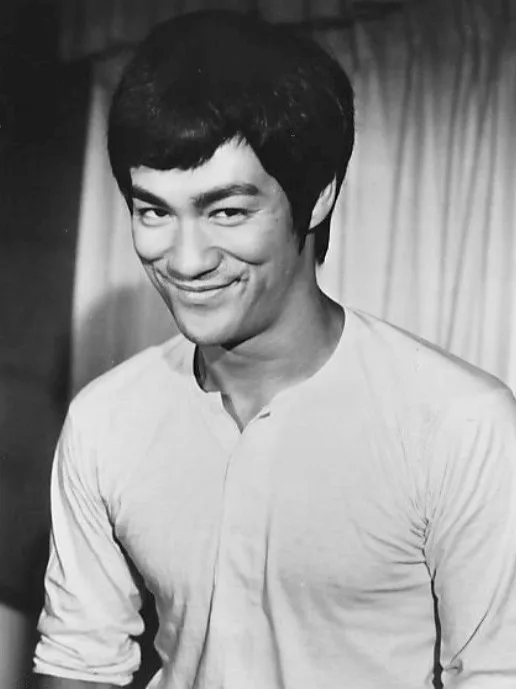
Jeet Kune Do (截拳道, “the way of the intercepting fist”) is the name Bruce Lee gave in 1967 to his own approach to fighting. It is less a style than an argument: that fixed forms and classical stances are a cage, that the fastest answer to an attack is to intercept it, and that a fighter should absorb what is useful from any art, discard what is not, and add what is specifically their own. Lee built it from the Wing Chun he had learned in Hong Kong, Western boxing, fencing footwork and timing, and a great deal of reading. After his death in 1973 his students carried it on in two broad lineages, and the idea outlived the founder by half a century.
- The intercepting fist: Attack the attack. The straight lead from the strong side forward, thrown as the opponent moves, is the signature technique.
- Strong side forward: Unlike boxing, the dominant hand and foot lead, so the fastest weapons are closest to the target.
- Economy: No wasted motion, no forms, no techniques kept for tradition's sake. “Absorb what is useful.”
- Ranges: Kicking, punching, trapping (from Wing Chun) and grappling, with the aim of moving between them freely.
- Philosophy: Lee's writing, collected in Tao of Jeet Kune Do, is as much a part of the art as the techniques.
Two broad camps formed after 1973. Original or Jun Fan Jeet Kune Do, associated with Ted Wong and others, teaches what Lee taught in his lifetime. The Concepts approach, associated with Dan Inosanto, treats Lee's method as a process and adds material from Filipino martial arts, Muay Thai, silat and grappling. Both claim Lee's blessing; both have produced good fighters and long arguments.
Jeet Kune Do schools are fewer than boxing or BJJ gyms and vary widely, because the art has no governing body and no competition format. Look for a lineage you can trace, sparring on the timetable, and a teacher who can explain why a technique is there rather than only who taught it. Many students train it alongside boxing or Muay Thai for the sparring and conditioning the small schools cannot always offer.
Further reading: Jeet Kune Do on Wikipedia