History
Bruce Lee and Jeet Kune Do: The History of the Intercepting Fist
How Bruce Lee went from Ip Man’s Wing Chun classes in Hong Kong to naming Jeet Kune Do in 1967, and what became of his method after his death in 1973.
10 min read · 21 September 2026 · updated 21 September 2026
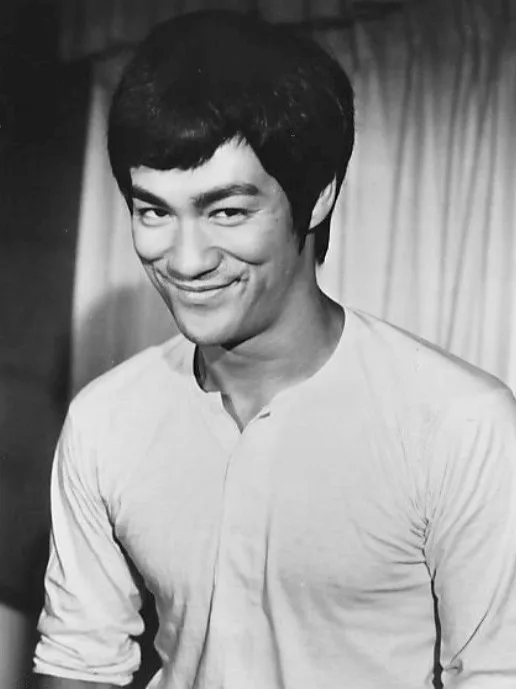
Photo: Publicity photograph for The Big Boss, 1973. National General Pictures, public domain, via Wikimedia Commons.
In this article
Timeline
- 1940
Lee Jun-fan, Bruce Lee, is born on 27 November at the Chinese Hospital in San Francisco while his father, the Cantonese opera star Lee Hoi-chuen, is on tour; the family returns to Hong Kong in 1941.
- 1941–1960
Appears as a child actor in around twenty Hong Kong films, from Golden Gate Girl (1941) as an infant to The Orphan (1960).
- c. 1953
Begins Wing Chun in Hong Kong under Ip Man; much of his hands-on instruction comes from the senior student Wong Shun-leung.
- 1958
Wins the Hong Kong inter-school boxing championship and the Crown Colony cha-cha championship.
- 1959
After a series of street fights and police attention, his parents send him to the United States in April with a hundred dollars; he settles in Seattle.
- 1961
Enrols at the University of Washington and teaches Jun Fan Gung Fu to a small group that includes Jesse Glover and Taky Kimura.
- 1963
Opens the first Jun Fan Gung Fu Institute in Seattle.
- 1964
Demonstrates at Ed Parker's Long Beach International Karate Championships on 2 August, marries Linda Emery on 17 August, opens the Oakland school with James Yimm Lee, and fights Wong Jack Man in Oakland late in the year.
- 1966–1967
Plays Kato in The Green Hornet on ABC; the series runs for a single season of 26 episodes.
- 1967
Opens the Los Angeles Chinatown school with Dan Inosanto and names his method Jeet Kune Do, the way of the intercepting fist.
- 1970
Injures his back during a weight-training warm-up; months in bed produce the notes that become Tao of Jeet Kune Do. He closes his schools rather than see the name turn into a style.
- 1971–1972
The Big Boss (1971), Fist of Fury (1972) and Way of the Dragon (1972) each break the Hong Kong box-office record in turn.
- 1973
Dies in Hong Kong on 20 July, aged 32; the official finding is cerebral oedema. Enter the Dragon opens in the United States in August.
- 1975
Tao of Jeet Kune Do is published from his notes by Ohara Publications.
- 1996
Linda Lee Cadwell and Shannon Lee convene his original students as the Jun Fan Jeet Kune Do Nucleus; the Bruce Lee Foundation later carries on the work.
On 2 August 1964 a 23-year-old in a dark suit walks onto the floor at Ed Parker's International Karate Championships in Long Beach, asks a volunteer to hold a pad against his chest, and places his fist an inch from it. The volunteer goes backwards into a chair put there for the purpose. Somebody films it. Within nine years the young man is the most famous martial artist who has ever lived.
The short answer: Bruce Lee (1940–1973) built Jeet Kune Do out of the Wing Chun he learned as a teenager in Hong Kong, the boxing he read about in Seattle, the fencing his brother practised, and one bad night in Oakland that convinced him none of it was enough. He named it in 1967, refused to let it become a style, and left it half-written in a stack of notebooks when he died in Hong Kong at 32. What follows is the documented life, disputed parts marked.
Key facts
- Founder
- Bruce Lee, born Lee Jun-fan (1940–1973), San Francisco and Hong Kong
- Foundation
- Wing Chun under Ip Man in Hong Kong from about 1953
- Schools
- Jun Fan Gung Fu Institutes in Seattle (1963), Oakland (1964) and Los Angeles (1967)
- Named
- Jeet Kune Do, 1967, after the fencing stop-hit
- Certified instructors
- Taky Kimura, James Yimm Lee, Dan Inosanto
- Lineages today
- Jun Fan (Original) Jeet Kune Do and Jeet Kune Do Concepts
A child star with a police record
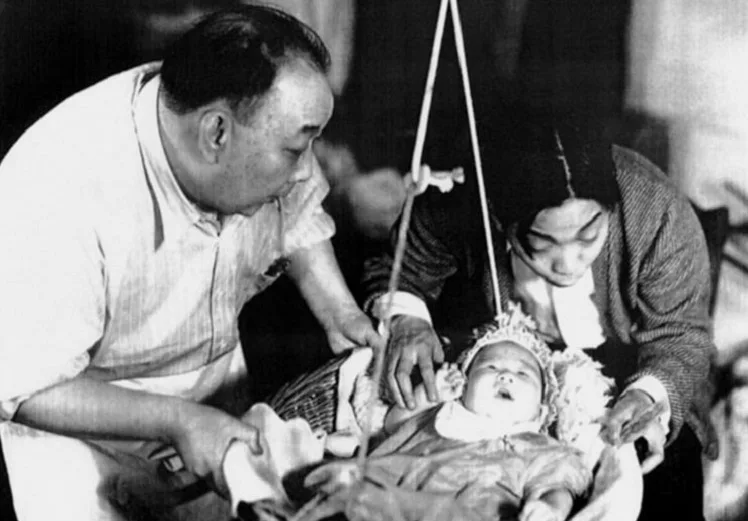
He was born Lee Jun-fan on 27 November 1940 at the Chinese Hospital in San Francisco, where his father, the Cantonese opera star Lee Hoi-chuen, was on tour. The family sailed back to Hong Kong in 1941, and the baby had already been on screen, a few months old, in Golden Gate Girl. By eighteen he had appeared in around twenty Hong Kong films, among them The Kid (1950) and The Orphan (1960). Hong Kong knew him as a child actor long before it knew him as a fighter.
The fighting began, by his own account, because he was losing street fights. In about 1953, aged twelve or thirteen, he joined the Wing Chun school of Ip Man, the Foshan master who had reached Hong Kong in 1949. Ip Man taught the seniors and the seniors taught the juniors, and the one who taught Lee most was Wong Shun-leung, a former boxer with a reputation for winning rooftop challenge matches. Lee absorbed the centreline, the straight punch and the sticking hands, and practised them to the point of obsession.
He also boxed. In 1958 he won the Hong Kong inter-school boxing championship, using Wing Chun straight punches inside a boxing ring. The same year he won the Crown Colony cha-cha championship, which tells you something about his footwork. But the rooftop fights kept going, and the police started to notice. In April 1959, with a hundred US dollars and his American birth certificate, he was put on a ship to San Francisco by parents who had run out of patience.
A hundred dollars and a restaurant in Seattle
In Seattle a family friend, Ruby Chow, gave him a room above her restaurant and a job waiting tables. He finished high school, enrolled at the University of Washington in 1961, and was teaching before he did either. His first student, Jesse Glover, a judoka, was followed by a small circle that included Taky Kimura, a Japanese American grocer nearly twice his age. Lee called the material Jun Fan Gung Fu, after his own name, and it was Wing Chun with the edges already coming off: longer kicks, boxing hands, and a suspicion of anything that only worked in the training hall.
In 1963 he opened the first Jun Fan Gung Fu Institute in Seattle, with Kimura as his assistant. He married a student, Linda Emery, on 17 August 1964, with Kimura as best man. He had spent the summer in Oakland with James Yimm Lee, a welder and weightlifter twenty years his senior, and the two had opened a second school there. Seattle was left in Kimura's hands, which is where it stayed for the next fifty years.
Three minutes in Oakland, or twenty
Oakland was where the method broke and was rebuilt. First came Long Beach in August 1964, where the one-inch punch made his name in American karate and, via the hairdresser Jay Sebring, put his film in front of the producer William Dozier. Then, late in the year, came Wong Jack Man.
Wong, a young Northern Shaolin practitioner newly arrived in San Francisco, turned up at the Oakland school with companions to fight. Why he came is the disputed part. In the version told by Lee, Linda and James Lee, Wong carried an ultimatum from Chinatown's martial-arts community – stop teaching non-Chinese or close – and the fight settled it in about three minutes, with Wong on the floor. In Wong's version, given to a Chinese-language newspaper soon after, there was no ultimatum, only a challenge provoked by Lee's boasting at a Chinatown theatre; the fight lasted twenty to twenty-five minutes, Lee was winded, and it ended without a clear result. No neutral witness has ever settled it. What is not disputed is Lee's reaction. He was disgusted with how tired he had been; ten years of Wing Chun had not been enough to finish a fight quickly.
So he took it apart. He started running, lifting weights with James Lee, reading everything he could find on Western boxing and studying films of Muhammad Ali. Fencing came from his older brother Peter Lee, a Hong Kong champion, and fencing supplied the idea that would give the art its name. The cleanest answer to an attack is the stop-hit: you do not parry and riposte, you hit the attacker as he comes.
Kato
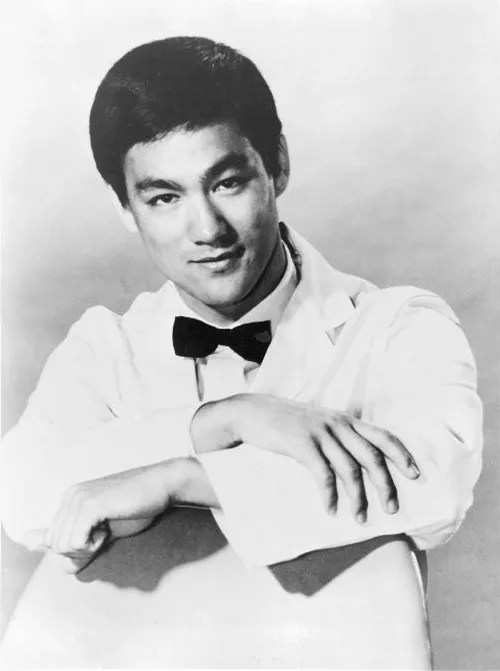
Dozier screen-tested him in 1965, days after his son Brandon was born, and in 1966 cast him as Kato, the masked chauffeur in The Green Hornet. The series ran on ABC for one season, 26 episodes from September 1966 to March 1967, and was cancelled. In America it made him a familiar face; in Hong Kong, where it aired as The Kato Show, it made him a star.
Los Angeles changed his teaching. He opened a third school in Chinatown in 1967 with Dan Inosanto, a Filipino American karate black belt, and he began taking private students at Hollywood rates: Steve McQueen, James Coburn, Kareem Abdul-Jabbar, and the karate champions Joe Lewis and Chuck Norris. That year, driving with Inosanto and talking about the stop-hit, he gave the method a name. Jeet Kune Do: the way of the intercepting fist.
He almost immediately regretted it. A name, he told Inosanto, would make people think it was another style, when the whole point was that a fighter should be bound by nothing. In 1970 he closed his own schools in Oakland and Los Angeles and asked Inosanto to keep teaching only a small private group in his backyard. He certified exactly three instructors in his lifetime, Kimura, James Lee and Inosanto, and by 1970 doubted he should have certified anyone.
Flat on his back, then Hong Kong
In 1970, lifting a barbell without warming up properly, he damaged a sacral nerve in his lower back. Doctors told him to give up kicking. He spent months in bed, and what he did there, since he could not train, was write: seven volumes of notes that Linda and the editor Gilbert Johnson would assemble after his death into Tao of Jeet Kune Do, published by Ohara in 1975. Then he got up and taught himself to kick again. Hollywood gave him a few episodes of Longstreet and declined to make him a leading man.
Hong Kong did not decline. Raymond Chow of the new studio Golden Harvest offered him two films, and The Big Boss, shot in Thailand in 1971, opened in October and broke the Hong Kong box-office record. Fist of Fury (March 1972) broke it again. Way of the Dragon (December 1972), which Lee wrote, directed and choreographed, ended with a fight against Chuck Norris in the Colosseum and broke it a third time. By early 1973 Warner Bros had arrived with a co-production, Enter the Dragon, shot in Hong Kong that spring. Its opening scene has Lee finishing Sammo Hung with an armbar, which no kung fu film had shown before.
20 July 1973
On 10 May 1973, dubbing Enter the Dragon at Golden Harvest, he collapsed with seizures, and doctors in Los Angeles diagnosed cerebral oedema, a swelling of the brain. He recovered. On the afternoon of 20 July he went with Raymond Chow to the flat of the actress Betty Ting Pei to discuss the unfinished Game of Death; he complained of a headache, took a tablet of Equagesic, a prescription painkiller of meprobamate and aspirin, and lay down. He could not be woken. He was pronounced dead that night at Queen Elizabeth Hospital, aged 32.
The autopsy found cerebral oedema, and the inquest in September returned a verdict of death by misadventure, concluding that the swelling was most likely a hypersensitive reaction to the meprobamate. That remains the official finding. Everything else, from the Hong Kong rumours of the time to Matthew Polly's 2018 argument for heat stroke, is hypothesis. Tens of thousands lined the streets for the Hong Kong funeral on 25 July; a week later he was buried at Lake View Cemetery in Seattle, McQueen, Coburn, Inosanto and Kimura among the pallbearers. Enter the Dragon opened in America in August.
Two ways to inherit
Three certified instructors had been named, and James Lee had died of cancer in December 1972. The other two disagreed for the rest of their lives about what Lee had left them. Inosanto, a kali and escrima man before he met Lee, took the founder at his word: Jeet Kune Do was a process, and the process meant absorbing Filipino weapons, Indonesian silat, Muay Thai and later Brazilian Jiu-Jitsu. That approach became Jeet Kune Do Concepts, and it spread widely. Kimura in Seattle and Ted Wong, who had trained privately with Lee from 1967 to 1973, took the other view: teach what Lee taught, as he taught it, and call it what he called it. That became Jun Fan Jeet Kune Do, or Original JKD. In 1996 Linda Lee Cadwell and Shannon Lee convened the surviving original students as the Jun Fan Jeet Kune Do Nucleus to write that material down; the Bruce Lee Foundation carries the archive today.
Then there is the largest claim made for him, that he fathered mixed martial arts. Dana White of the UFC has said so more than once, and the case is not foolish: Lee argued in the 1960s that a fighter should train standing, in the clinch and on the ground, and that the only test was the fight. The measured version is that MMA as a sport came out of the Gracie family's challenge matches and the first UFC in November 1993, twenty years after his death, and that Lee never fought a documented professional bout. He described the destination two decades before anyone arrived.
Where to go next
- The Jeet Kune Do discipline hub collects the training articles, and the Wing Chun hub covers the art Lee started from.
- Where the centreline came from: The History of Wing Chun, and how it compares with the boxing Lee borrowed from in Wing Chun vs Boxing.
- The sport that inherited his argument: The History of MMA.
- The hands he studied on film: Boxing: From Bare Knuckles to the Queensberry Rules.
Sources
- Matthew Polly, Bruce Lee: A Life (Simon & Schuster, 2018)
- Bruce Lee, Tao of Jeet Kune Do (Ohara Publications, 1975)
- Dan Inosanto, Jeet Kune Do: The Art and Philosophy of Bruce Lee (Know Now Publishing, 1976)
- Linda Lee, Bruce Lee: The Man Only I Knew (Warner Books, 1975)
- Bruce Lee Foundation – Bruce Lee biography and Jeet Kune Do
- Encyclopaedia Britannica: Bruce Lee
- Wikipedia: Bruce Lee
Frequently asked questions
- What does Jeet Kune Do mean?
- Jeet Kune Do is Cantonese for “the way of the intercepting fist”. Bruce Lee chose the name in 1967 after the fencing idea of the stop-hit: rather than blocking and then countering, you strike the attacker in the moment he commits.
- Is Jeet Kune Do the same as Wing Chun?
- No. Wing Chun was Lee's foundation, learned under Ip Man in Hong Kong, and its centreline theory and straight punch remain at the core of Jeet Kune Do. But Lee added Western boxing, fencing footwork and timing, kicks from northern Chinese styles and grappling, and he rejected fixed forms altogether.
- Who did Bruce Lee train under?
- His only formal teacher was Ip Man, whose Wing Chun school he joined in Hong Kong in about 1953; the senior student Wong Shun-leung did much of the hands-on teaching. Everything after that Lee taught himself from books, film and sparring partners such as the karate champions Joe Lewis and Chuck Norris.
- How did Bruce Lee die?
- He died in Hong Kong on 20 July 1973, aged 32, after taking a painkiller for a headache and lying down at a friend's flat. The autopsy found cerebral oedema, a swelling of the brain, and the inquest recorded death by misadventure, attributing it to a reaction to the drug. Other explanations have been proposed since; none has been proved.
- Did Bruce Lee invent MMA?
- No, but he is widely credited as a forerunner. He argued from the 1960s that a fighter should train striking, clinching and grappling and take what works from any style, which is the premise of modern MMA. The sport itself grew out of the first UFC events in 1993, twenty years after his death.
- What is the difference between Jun Fan Jeet Kune Do and JKD Concepts?
- Jun Fan Jeet Kune Do, sometimes called Original JKD, teaches the material Lee himself taught between 1967 and 1973. JKD Concepts, associated with Dan Inosanto, treats Jeet Kune Do as a process and freely adds Filipino, Indonesian, Thai and grappling arts. Both descend from Lee's certified students.