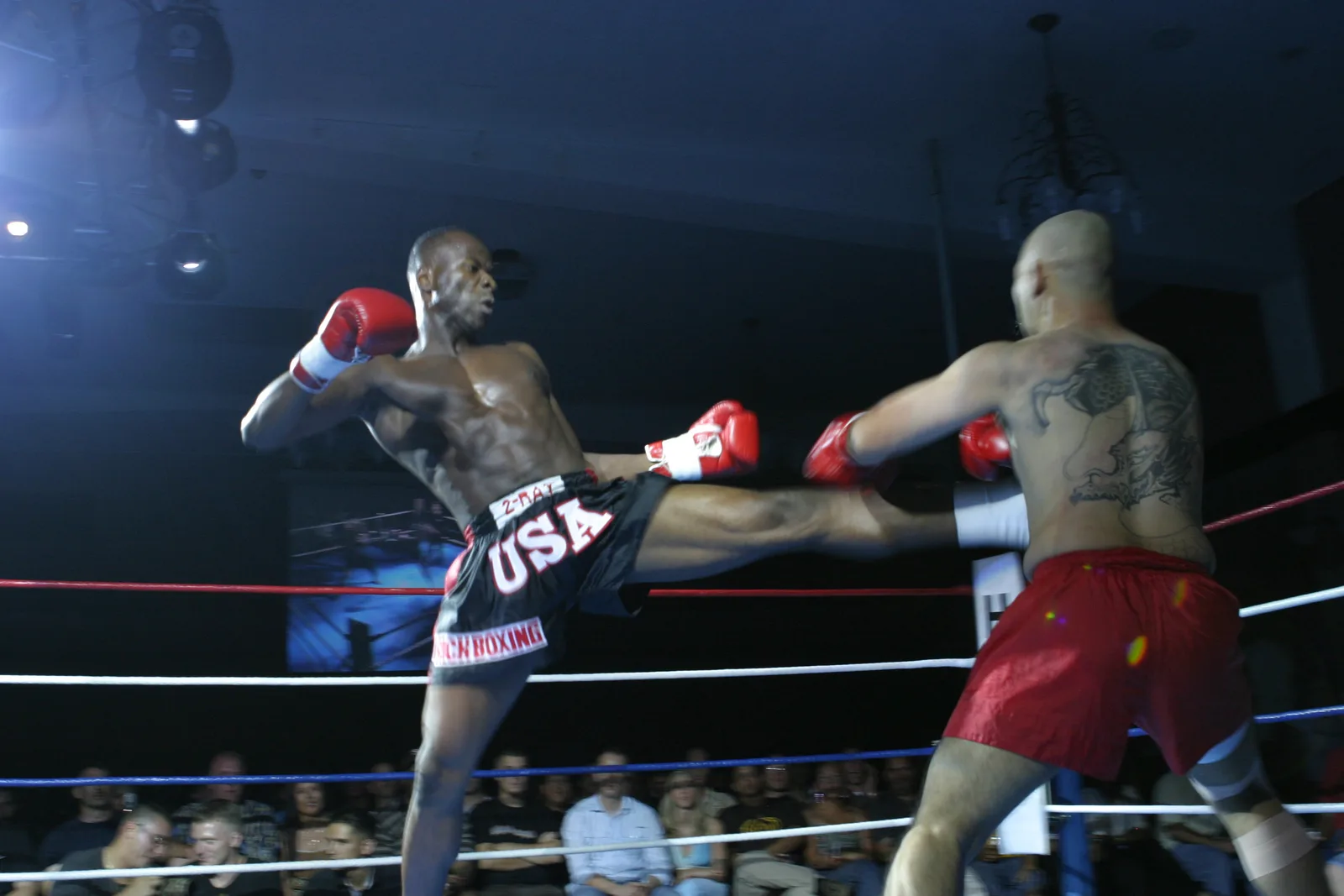
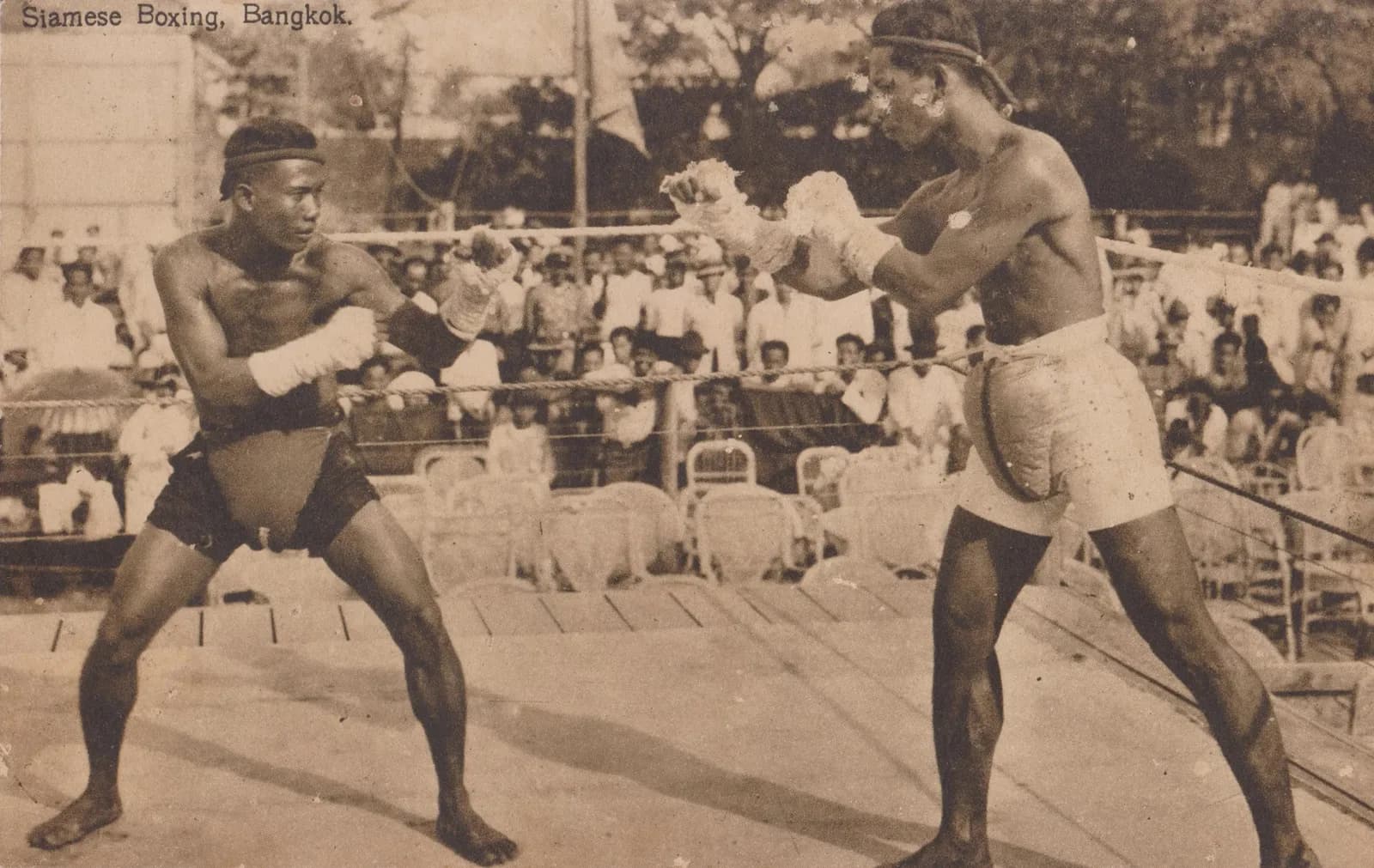
Kickboxing is a family of ring sports that allow punches and kicks – and in most modern rule sets knees – but no elbows and only a brief clinch. The name was coined in Japan in the 1960s for a sport that mixed karate with Muay Thai and boxing; in the 1970s Dutch gyms built their own version from Kyokushin karate, Muay Thai and Western boxing, and that Dutch style became the template for K-1 in the 1990s and for most kickboxing gyms in Europe and North America today. American full-contact kickboxing, with kicks only above the waist, is a separate branch that has largely faded.
- Combinations: Boxing hands set up kicks; three- and four-strike combinations are the core skill.
- The low kick: The great equaliser of Dutch kickboxing, thrown to the thigh at the end of punch combinations.
- Pace: Round-by-round scoring rewards volume and clean strikes, so the sport is fast and mobile.
- No elbows, short clinch: The inside game is boxing – hooks, uppercuts and getting out – rather than Muay Thai's clinch.
Anyone who wants to learn to punch and kick in combination with boxing-style movement, and anyone looking for the most accessible striking class in town. Kickboxing is taught in specialist gyms, martial-arts schools and fitness chains alike. Boxers and karateka pick it up quickly; people who later want elbows and the clinch move on to Muay Thai, which shares most of the technique. Gloves, hand wraps, shin guards and a mouthguard are the usual kit.
Further reading: Kickboxing on Wikipedia