History
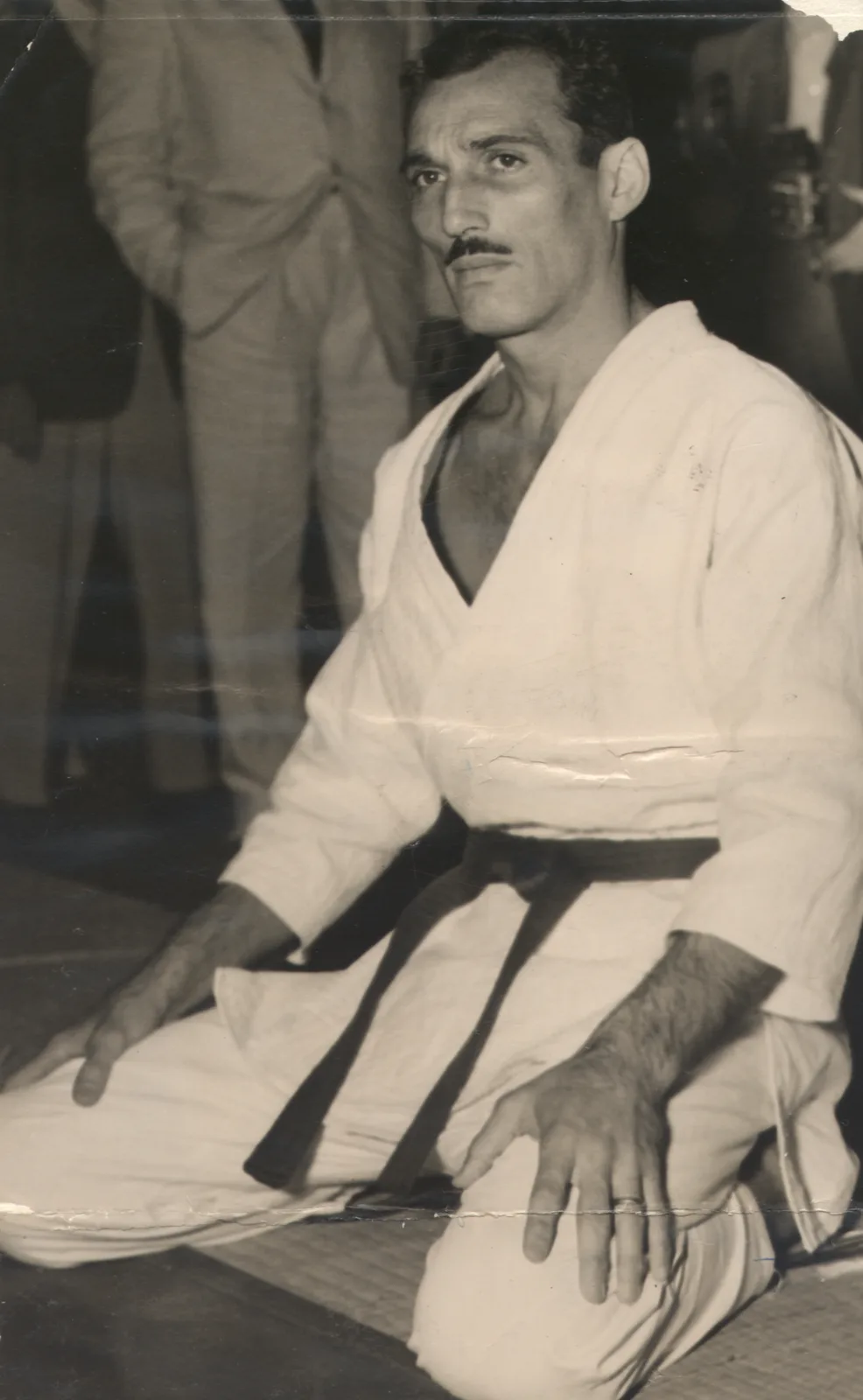
Hélio Gracie: The Frail Brother Who Rebuilt Jiu-Jitsu
The life of Hélio Gracie (1913–2009): the sickly boy from Belém who reworked judo around leverage, fought Kimura and Santana, and lived to see UFC 1.
10 min read · 21 Sept 2026
Discipline hub
Ground fighting with positions, joint locks and chokes – technique beats strength.

Brazilian Jiu-Jitsu emerged in Brazil in the 1920s after the Japanese judoka Mitsuyo Maeda taught there. The Gracie family developed it into a style that puts ground fighting at the centre: position before submission, joint locks and chokes instead of strikes.
Anyone who likes solving problems and wants to hold their own against bigger people with technique. BJJ carries fewer injuries than striking sports but is demanding on the neck, fingers and elbows. Rolling (sparring) is part of it from the first month.
Further reading: Brazilian Jiu-Jitsu on Wikipedia
Brazilian Jiu-Jitsu
History
The life of Hélio Gracie (1913–2009): the sickly boy from Belém who reworked judo around leverage, fought Kimura and Santana, and lived to see UFC 1.
10 min read · 21 Sept 2026
History
The life of Rickson Gracie: Hélio's son, the vale tudo fights with Rei Zulu, the Japan tournaments and PRIDE, the 400–0 legend and the record behind it.
9 min read · 21 Sept 2026
History
How mixed martial arts grew from ancient pankration and Brazilian vale tudo through Japanese shoot wrestling to the UFC, the Unified Rules and a global sport.
8 min read · 20 Sept 2026
History
How Maeda Mitsuyo brought judo to Brazil, how the Gracies rebuilt it around leverage, and how UFC 1 in 1993 made it the grappling base of MMA.
9 min read · 17 Sept 2026
Brazilian Jiu-Jitsu
Training
No single art wins a street fight. An honest ranking of ten martial arts for self-defence by what actually matters: pressure-testing, speed and range.
9 min read · 21 Sept 2026
Training
Usually eight to twelve years. The IBJJF minimums per belt, the children's colours, what speeds the road up or slows it down, and why nobody good is counting.
7 min read · 21 Sept 2026
Training
Which martial art suits your child? A guide by age and temperament: judo, BJJ, karate, taekwondo, wrestling and boxing, plus how to judge a club.
8 min read · 21 Sept 2026
Training
Strength over position, tapping late, collecting techniques, only rolling with weaker partners: eight habits that stretch the white belt year, and the fix.
8 min read · 20 Sept 2026
Training
Seven days out you gain no fitness but can lose a lot. A day-by-day plan for training, sleep, weight, routine and nerves, built on tapering research.
7 min read · 17 Sept 2026
Brazilian Jiu-Jitsu
Workout
Hips, back, grip and core with one kettlebell in thirty minutes: swings, squats, rows, presses, carries. Which bell to buy, how to lift, how to progress.
5 min read · 17 Sept 2026
Brazilian Jiu-Jitsu
Guide
From the weigh-in to the first bell: what to drink and eat, how much and when, so you step into the ring at full strength – with research-backed timings.
6 min read · 17 Sept 2026
Guide
Lose fat or drop water? How much is realistic, when to start, what to eat in a deficit and where the line is. A sober, sourced guide without extreme protocols.
7 min read · 17 Sept 2026
Brazilian Jiu-Jitsu
Comparison
Eight limbs standing or a fight on the floor? BJJ and Muay Thai compared on training, fitness, injuries, self-defence, time to competence, cost and MMA.
8 min read · 21 Sept 2026
Comparison
Rolling on the floor every night or lines, kata and point sparring? BJJ and karate compared on belts, kids, fitness, injuries, self-defence, cost and culture.
7 min read · 21 Sept 2026
Comparison
Soviet throws and leg locks versus Brazilian guard and chokes: rules, technique, culture, access and MMA transfer compared, and which one to train.
6 min read · 20 Sept 2026
Comparison
Judo throws, BJJ finishes on the ground. What each trains, how they differ in rules, cost, injuries and time to competence, and which to pick for your goals.
9 min read · 20 Sept 2026