History
Hélio Gracie: The Frail Brother Who Rebuilt Jiu-Jitsu
The life of Hélio Gracie (1913–2009): the sickly boy from Belém who reworked judo around leverage, fought Kimura and Santana, and lived to see UFC 1.
10 min read · 21 September 2026 · updated 21 September 2026
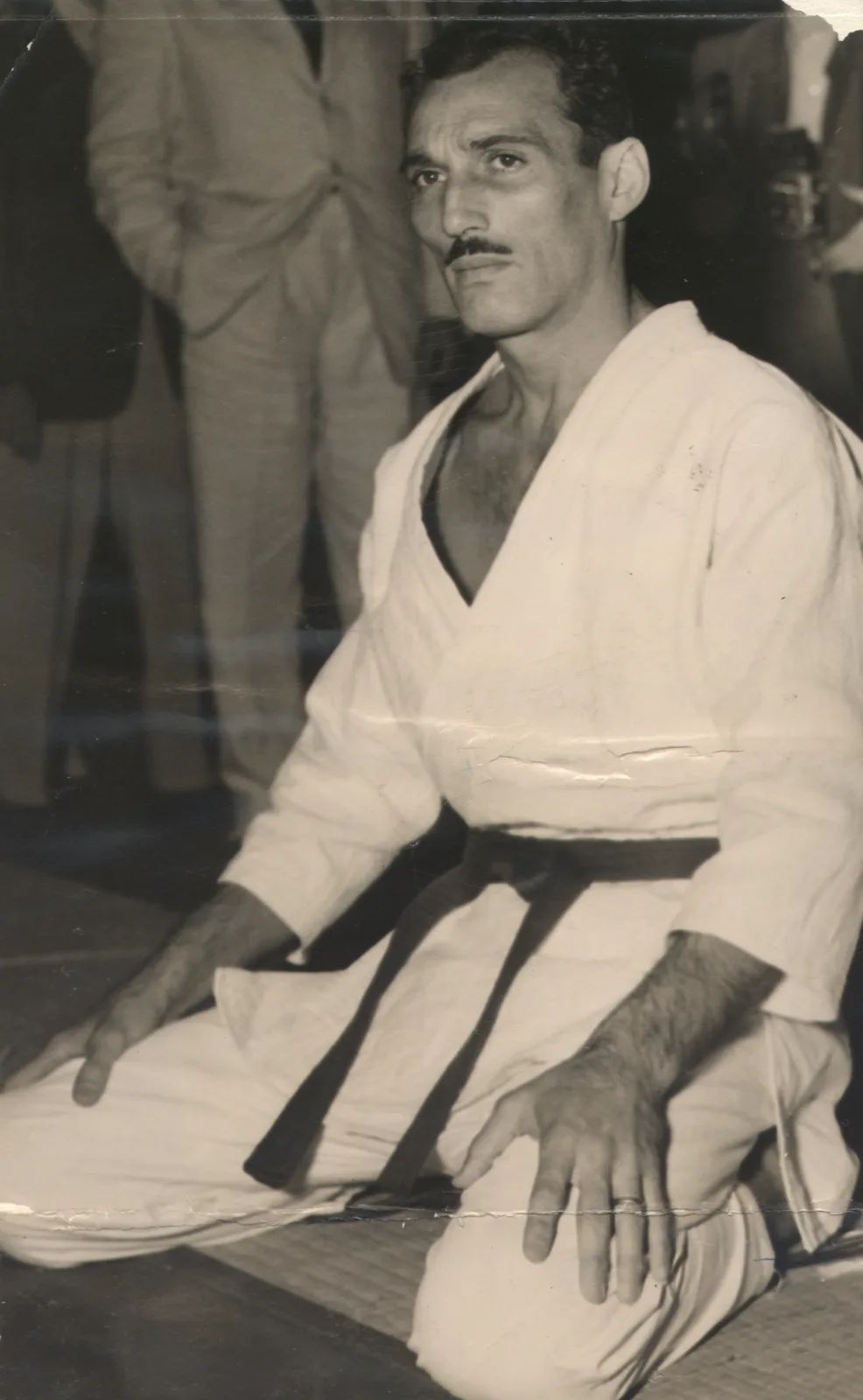
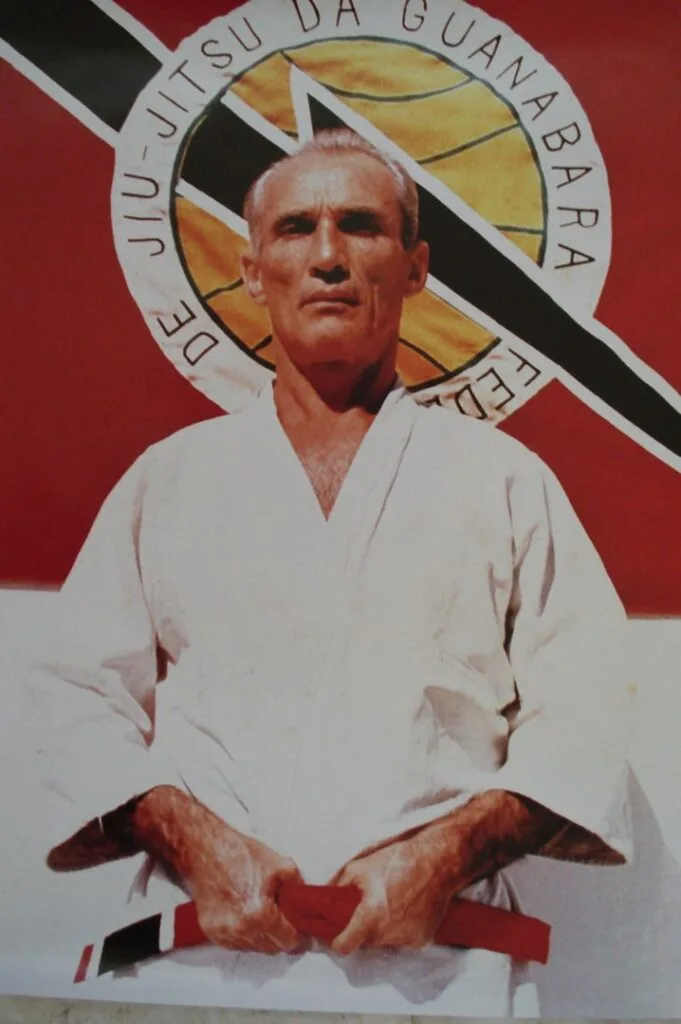
Photo: Correio da Manhã archive, 1952. Public domain, via Wikimedia Commons.
In this article
Timeline
- 1913
Hélio Gracie is born on 1 October in Belém, at the mouth of the Amazon, the youngest of Gastão Gracie's sons.
- 1925
His eldest brother Carlos opens the Academia Gracie de Jiu-Jitsu in Rio de Janeiro. Hélio, small and often ill, watches the classes.
- c. 1929
According to the family account, Hélio teaches his first class at sixteen when Carlos is late for a lesson, and is asked to keep teaching.
- 1932
His first professional fight: he submits the boxer Antonio Portugal with an armlock in about thirty seconds. Later that year he goes fourteen rounds with the wrestler Fred Ebert.
- 1934
He draws with the Polish wrestling champion Wladek Zbyszko in Rio.
- 1935
He chokes the Japanese judoka Taro Miyake and begins a series of drawn matches with Yassuiti Ono.
- 1951
In September he draws with and then chokes out the judoka Katō Yukio. On 23 October he loses to Kimura Masahiko at the Maracanã when Carlos throws in the towel.
- 1952
Rorion, the first of his seven sons, is born. Relson follows in 1953 and Rickson in 1958.
- 1955
On 24 May, aged 41, he fights his former student Waldemar Santana for three hours and forty minutes and loses. It is his last major vale tudo fight.
- 1967
The first jiu-jitsu federation in Rio, the Federação de Jiu-Jitsu da Guanabara, formalises rules and belts for the sport he and Carlos built.
- 1978
Rorion moves to the United States and begins teaching Gracie jiu-jitsu from a garage in Southern California.
- 1993
On 12 November his son Royce wins the first Ultimate Fighting Championship in Denver with Hélio, aged 80, in his corner.
- 2009
Hélio Gracie dies on 29 January in Itaipava, in the hills above Rio, aged 95.
On 23 October 1951, in the Maracanã stadium in Rio de Janeiro, a man of about 64 kilograms is lying on his back with his right arm bent behind him at an angle arms are not built for. The man holding it, Kimura Masahiko, is the best judoka in the world and some 35 kilograms heavier. Kimura has the lock, and he waits for the tap. It does not come. The arm gives way, and still it does not come. Then a towel lands on the mat, thrown by the older brother in the corner, and the fight is over.
The short answer: the man on the mat was Hélio Gracie, and that refusal is his whole biography in one gesture. Born small and sick in 1913, he took a Japanese art built for strong bodies and rebuilt it for weak ones, then spent twenty-three years testing the result against anyone who would fight him. He lost the two fights everyone remembers, and lived to see his son win the first UFC. The story of the art is told in our history of Brazilian jiu-jitsu; this is the story of the man.
Key facts
- Born
- 1 October 1913, Belém, Pará, Brazil
- Died
- 29 January 2009, Itaipava, Rio de Janeiro state, aged 95
- Art
- Gracie jiu-jitsu, adapted from the judo taught by Maeda Mitsuyo
- Fighting years
- 1932–1955, vale tudo and jiu-jitsu rules
- Famous fights
- Kimura Masahiko 1951 (loss), Waldemar Santana 1955 (loss, 3 h 40 min)
- Legacy
- Seven sons including Rickson and Royce; UFC 1 won by Royce in 1993
The boy on the bench
Hélio was born on 1 October 1913 in Belém, the rubber port at the mouth of the Amazon where his father, Gastão Gracie, did business with a Japanese judoka named Maeda Mitsuyo. He was the youngest of five brothers and the smallest, and by every account, including his own, he was ill for most of his childhood. The family story has doctors advising against exercise and the boy fainting on stairs. When the Gracies moved to Rio de Janeiro in the early 1920s and his eldest brother Carlos opened the Academia Gracie in 1925, Hélio's role was to sit on the side and watch.
He watched for years. A boy who cannot join in has nothing to do but think about what he is seeing, and what Hélio saw was Kōdōkan judo as Maeda had fought it: heavy on the ground, aimed at chokes and joint locks, and taught by brothers who were bigger and stronger than he would ever be. He learned it in his head before he learned it with his body. It is not the usual way to become a martial artist, but it is a good way to become one who questions every technique.
The day Carlos was late
The story of his first class is repeated in every Gracie biography and should be read as what it is: a family account. Hélio was sixteen, so around 1929. A student arrived for a private lesson, Carlos had not, and Hélio offered to fill in. By the end of the hour the student, by tradition a bank director named Mário Brant, asked to keep training with the younger brother. Hélio became a teacher before he had ever seriously been a student.
What he taught was not quite what Carlos taught. Techniques that relied on strength had to be finished some other way, and the other way was leverage: more movement of the hips, more use of the legs from underneath, chokes and locks applied by the whole body rather than the arms, and a patient closed guard from which a smaller man could wait, defend and attack. None of this was new to judo. What was new was a method built on the assumption that the practitioner would always be the weaker person in the fight. Hélio drew that line between Gracie jiu-jitsu and its Japanese parent; BJJ vs judo walks along it.
Thirty seconds with a boxer
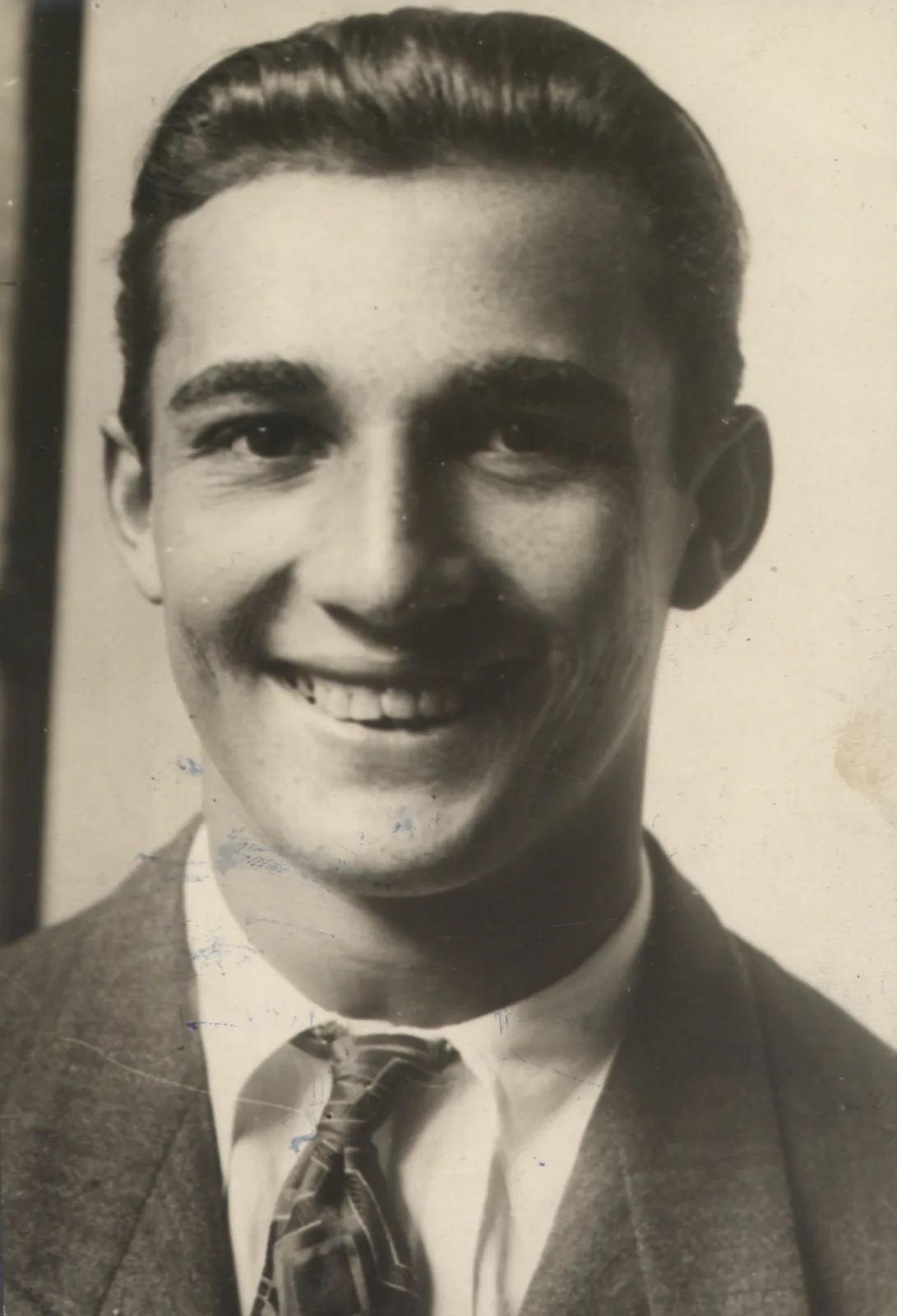
He was eighteen when he turned professional in 1932, and his first opponent was a boxer, Antonio Portugal. Hélio took him down and armlocked him in about thirty seconds. That is the fight the family tells; the one worth knowing is the next, against the American wrestler Fred Ebert, which went fourteen rounds without a winner and showed what the method really was. It was not a knockout art. It was a way of surviving a stronger man for as long as it took.
The 1930s were spent proving it against everyone Rio could produce. In 1934 he drew with Wladek Zbyszko, the Polish heavyweight who had been world wrestling champion when Hélio was a child. In 1935 he choked the Japanese judoka Taro Miyake and began a series of fights with Yassuiti Ono, another Japanese immigrant, that ended in draws. The pattern is easy to see from a distance. Against strikers Hélio won. Against grapplers of his own quality he could not be beaten but could not always win, and the draw became a Gracie result: the small man is still standing, and the challenge stays open.
Maracanã, 23 October 1951
By 1951 Hélio was 38, running the academy and past the age at which most fighters stop. The Japanese came anyway. In September he fought the judoka Katō Yukio to a draw and then, in the rematch a few weeks later, choked him unconscious. Katō had been the warm-up. The man the Japanese team had really brought was Kimura Masahiko, All-Japan champion, in his prime, and by common estimate around 35 kilograms heavier than Hélio.
They fought at the Maracanã before a reported crowd of around 20,000. Kimura, by his own account, threw Hélio again and again and was surprised each time to find him back in guard. The fight was into its second round when Kimura secured the bent-arm lock the Japanese call ude-garami, cranked it, and heard the arm break. Hélio did not tap. Carlos threw in the towel. The lock has been called the kimura in every jiu-jitsu academy on earth ever since, which is a strange kind of immortality for the man who lost to it, and exactly the kind Hélio understood. The loss did more for the Gracie name than any of his wins.
Three hours and forty minutes
The other famous loss came four years later and was, in its way, worse. Waldemar Santana had been Hélio's student and an employee at the academy; they fell out, and on 24 May 1955 they met in Rio under vale tudo rules. Hélio was 41. Santana was 23, a strong athlete with a full jiu-jitsu education from the man he was fighting. There was no time limit. They fought for about three hours and forty minutes, most of it on the ground, until Hélio, exhausted, was caught with a kick to the head and could not continue. It is widely reported as the longest uninterrupted vale tudo fight on record, and nobody has been in a hurry to break it.
Hélio never fought a major vale tudo match again. Carlson Gracie, Carlos's son, beat Santana the following year and led the Gracie fighting team for two decades, and the old man went back to the mat as a teacher, which is where, on the evidence of the next fifty years, he had always been most dangerous.
Seven sons and a garage
Hélio had nine children, seven of them sons, every one with a name beginning with R: Rorion (born 1952), Relson, Rickson, Rolker, Royler, Royce and Robin. All were raised on the mat, and the family treated jiu-jitsu less as a sport than as a household system, complete with the Gracie diet Carlos had devised and a standing rule that any fighter of any style could walk into the academy and test himself. This was the Gracie challenge, and it kept the art honest for sixty years by the simplest method available: someone was always about to find out.
The challenge went abroad with Rorion, who moved to the United States in 1978 and taught from a garage in Southern California. Out of that garage came the Ultimate Fighting Championship, designed with the advertising man Art Davie to answer the question the Gracies had been asking since 1925. Rorion did not send Rickson, the family's best fighter, whose story is in our Rickson Gracie biography. He sent Royce, slighter and calmer, so the audience would see the method rather than the man. On 12 November 1993 in Denver, Royce beat a boxer, a shootfighter and a savate champion in one night, and Hélio, aged 80 and in a gi, was in his corner. It was the Kimura fight in reverse: the small man in the gi, the giants, and this time the towel stayed in the corner. What that night made of the sport is in our history of MMA.
A red belt and a blue one
He taught into his nineties, in the same white gi and with the same opinions. He disliked the sport version of the art, with its points and its time limits, and said so; he taught self-defence to beginners himself long after the academy had instructors to spare. The academy he and Carlos built was by then a diaspora. Gracie schools ran in California, Brazil and Europe, and the art they taught had become, through the UFC, the grappling base of mixed martial arts.
Then there is the question of rank. The Gracie family recognises Hélio as a 10th-degree red belt, the grade that the IBJJF's system reserves for the pioneers of the art, the Gracie brothers of the founding generation. The rank was conferred within the family lineage rather than by an outside body, which is the only way a founder's rank can be conferred, and some in the wider BJJ world have noted the circularity. Hélio's own last word on the subject was visual. In his final years he set the red belt aside and wore a plain navy-blue one on the mat, a choice the family has explained in his terms: the belt was his to wear, and he chose the one that made his point.
He died at home in Itaipava, in the hills above Rio, on 29 January 2009, aged 95. The family said he had taught until about ten days before. The papers called him the founder of Brazilian jiu-jitsu, which is generous to one man and unfair to several others; what he unarguably founded was the idea that the weaker person in a fight has a method of their own. Every white belt who pulls guard on a bigger training partner is testing it.
Where to go next
- The art's full story, from Maeda's arrival in Belém to the IBJJF: Brazilian Jiu-Jitsu: From Maeda to the Gracies.
- The son the family called its best fighter: Rickson Gracie: The Family's Best Fighter.
- How the vale tudo fights became a regulated sport: The History of MMA and MMA rules explained.
- The parent art and where Hélio's version departs from it: BJJ vs judo and the judo hub.
- Starting on the mat yourself: the BJJ hub and BJJ white belt mistakes.
Sources
- Reila Gracie, Carlos Gracie: O Criador de uma Dinastia (Record, 2008)
- Roberto Pedreira, Choque: The Untold Story of Jiu-Jitsu in Brazil, Volume 1, 1856–1949 (GTR Publications, 2015)
- Kimura Masahiko, My Judo (1985), the chapter on the 1951 fight in Rio
- The New York Times – Hélio Gracie, 95, Brazilian Jiu-Jitsu Founder, Dies (February 2009)
- Gracie University – The Gracie family and the history of Gracie Jiu-Jitsu
- International Brazilian Jiu-Jitsu Federation – Graduation System
- Wikipedia: Hélio Gracie
Frequently asked questions
- Who was Hélio Gracie?
- Hélio Gracie (1913–2009) was a Brazilian martial artist who, with his brother Carlos, turned the judo their family had learned from Maeda Mitsuyo into Gracie jiu-jitsu, the root of modern Brazilian jiu-jitsu. He fought vale tudo matches from 1932 to 1955, ran the Gracie Academy in Rio and fathered a generation of fighters that includes Rickson and Royce Gracie.
- Did Hélio Gracie invent Brazilian jiu-jitsu?
- Not alone. Carlos Gracie learned the art first and opened the academy in 1925; other lineages, such as that of Luiz França and Oswaldo Fadda, ran alongside the Gracies. Hélio's contribution was to rework the techniques around leverage and hip movement so that a small man could use them, and that version became the family's method.
- Who won the fight between Hélio Gracie and Kimura?
- Kimura Masahiko won on 23 October 1951 at the Maracanã in Rio. He caught Hélio in a bent-arm shoulder lock, ude-garami, in the second round; Hélio did not submit, his arm was broken and Carlos Gracie threw in the towel. The technique is known in BJJ as the kimura.
- How long was the Hélio Gracie vs Waldemar Santana fight?
- About three hours and forty minutes, on 24 May 1955 in Rio. Hélio was 41 and Santana, a former student, was 23. Santana won after Hélio was exhausted, and the bout is widely reported as the longest uninterrupted vale tudo fight on record.
- Was Hélio Gracie a red belt?
- The Gracie family recognises him as a 10th-degree red belt, the rank the IBJJF reserves for the pioneers of the art. The grade was conferred within the family lineage rather than by an outside body, and in his final years he chose to wear a plain navy-blue belt instead.
- How did Hélio Gracie die?
- He died of natural causes on 29 January 2009 at his home in Itaipava, in the state of Rio de Janeiro, aged 95. The family said he had taught at the academy until about ten days before his death.