History
Rickson Gracie: The Family's Best Fighter
The life of Rickson Gracie: Hélio's son, the vale tudo fights with Rei Zulu, the Japan tournaments and PRIDE, the 400–0 legend and the record behind it.
9 min read · 21 September 2026 · updated 21 September 2026
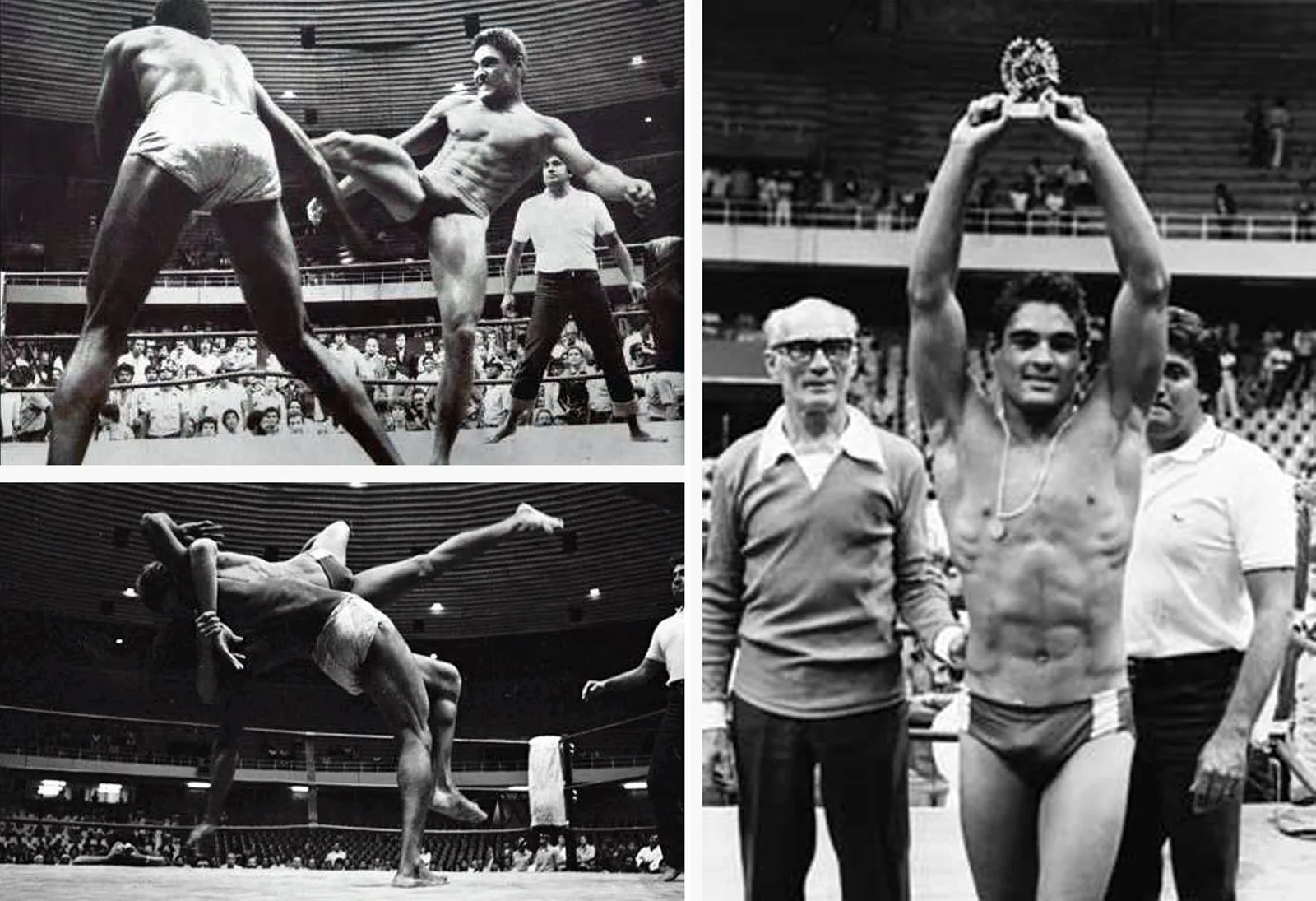
Photo: Rickson Gracie against Rei Zulu, Brasília, 1980. Public domain, via Wikimedia Commons.
In this article
Timeline
- 1958
Rickson Gracie is born on 21 November in Rio de Janeiro, the third son of Hélio Gracie.
- c. 1976
He receives his black belt at eighteen and begins teaching at the family academy. His cousin Rolls Gracie becomes his main influence.
- 1980
In Brasília he fights the vale tudo champion Rei Zulu, Casimiro de Nascimento Martins, a much heavier man, and wins by rear-naked choke.
- 1982
Rolls Gracie dies in a hang-gliding accident, aged 31. Rickson takes over much of his teaching.
- 1984
The rematch with Rei Zulu in Rio de Janeiro ends the same way, with a choke.
- 1988
The confrontation with the luta livre fighter Hugo Duarte on a beach in Rio is filmed and widely circulated, hardening the rivalry between the two grappling styles.
- 1989
Rickson moves to Los Angeles and opens his own academy, teaching alongside the family's Torrance school.
- 1993
His younger brother Royce, not Rickson, is chosen to represent the family at the first UFC on 12 November in Denver and wins.
- 1994
On 29 July Rickson wins the eight-man Vale Tudo Japan tournament in Tokyo, finishing all three opponents.
- 1995
On 20 April he wins Vale Tudo Japan again, beating Yuki Nakai in the final. The documentary Choke follows him through the event.
- 1997
On 11 October, at the first PRIDE event in the Tokyo Dome, he submits the pro-wrestling star Nobuhiko Takada with an armbar.
- 1998
On 11 October, at PRIDE 4, he beats Takada again by armbar.
- 2000
On 26 May he submits Masakatsu Funaki by rear-naked choke at the Tokyo Dome, his last professional fight. In December his eldest son Rockson dies in New York, aged 19.
- 2017
He is promoted to red belt, ninth degree, at a ceremony in Rio de Janeiro, as widely reported.
- 2021
His memoir Breathe: A Life in Flow, written with Peter Maguire, is published.
Brasília, 1980. A 21-year-old in a jiu-jitsu gi is standing across a ring from Rei Zulu, the king of Brazilian vale tudo, who has been beating challengers all over the country and outweighs the young man by a margin that the photographs make obvious. Zulu fights like what he is, a large strong man who wants to hurt someone. The young man takes him down, works to his back and chokes him. Then, four years later in Rio, he does it again.
The short answer: Rickson Gracie is the fighter the Gracie family produced when it stopped needing to prove that a small man could survive and started proving that one of its own could win. He is Hélio's third son, the student of Rolls, the man the family kept back from UFC 1 and sent to Japan instead, and the only Gracie who retired undefeated at the top of the sport his family had made. The story of the art belongs to our history of Brazilian jiu-jitsu, and his father's to the Hélio Gracie biography. This is the story of the fighter.
Key facts
- Born
- 21 November 1958, Rio de Janeiro, Brazil
- Father
- Hélio Gracie; black belt at 18, student of his cousin Rolls
- Fighting years
- 1980–2000, vale tudo in Brazil and Japan, PRIDE
- Documented MMA record
- 11–0 (Sherdog); the family's figure for all fights is around 400–0
- Key wins
- Rei Zulu 1980 and 1984, Vale Tudo Japan 1994 and 1995, Takada 1997 and 1998, Funaki 2000
- Rank
- Red belt, 9th degree, awarded 2017 as reported; founder of the Jiu-Jitsu Global Federation
The house where everyone fought
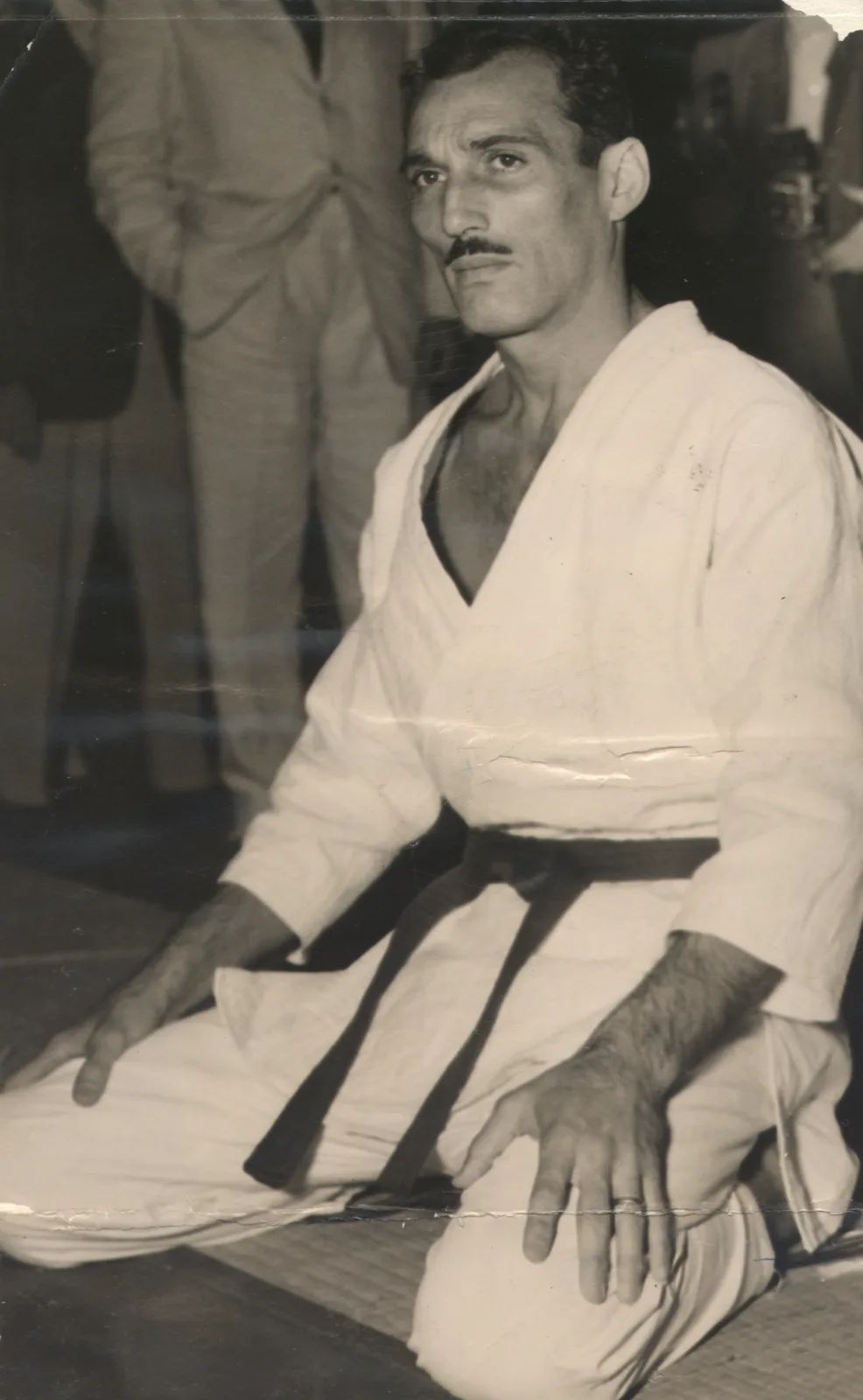
Rickson was born on 21 November 1958 in Rio, into a family in which jiu-jitsu was not a hobby but the weather. His father Hélio, then 45, had fought Kimura and Santana and had gone back to teaching; his uncle Carlos ran the household and the diet; his brothers, cousins and half-brothers all trained. The academy was the family business and the family school, and the standing invitation to fighters of any style to walk in and test the method meant that the boys grew up watching men lose in the room next door.
He was, by every account including his own, the one it came easiest to. He was promoted to black belt at eighteen and began teaching, but the teacher who shaped him was not his father. It was his cousin Rolls Gracie, Carlos's son, who trained wrestling and sambo, borrowed from anyone, and treated the family art as something to be improved rather than preserved. Rolls died in a hang-gliding accident in 1982, aged 31, and much of his teaching, and his students, passed to Rickson. The family had a fighter who could do what Rolls had wanted done, and a reason to send him out to do it.
Brasília, 1980: the king of vale tudo
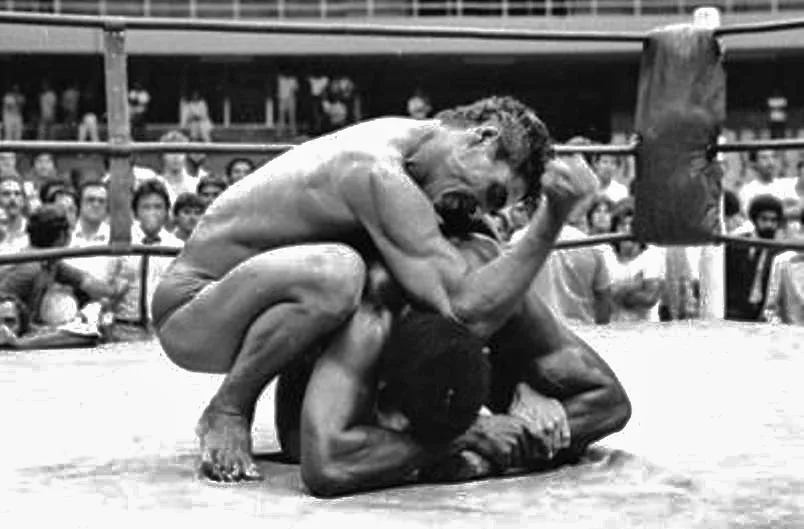
Casimiro de Nascimento Martins, known as Rei Zulu, king Zulu, was the great vale tudo attraction of Brazil in the late 1970s, a very strong man from the north-east who fought a style of his own and had run through everyone put in front of him. In 1980 the Gracies sent Rickson, 21 years old and giving away a great deal of weight, to fight him in Brasília. It was the first fight in the documented record. Zulu was fast and violent and Rickson was thrown around early; then he took Zulu down, got behind him and finished with a rear-naked choke. The rematch in Rio in 1984 ended the same way.
Two fights, two chokes, and the family's private opinion became public. Where Hélio had drawn with the big men, his son beat them. It is worth noting how few fights there are. Brazilian vale tudo in the 1980s had no promoters worth the name, and a Gracie's real record was made in challenge matches at the academy, on which there are no records at all.
A beach in Rio, 1988
The most famous of those unrecorded fights was filmed. Brazilian grappling in the 1980s had two camps, the jiu-jitsu of the Gracie academies and luta livre, the no-gi submission wrestling of the working-class gyms, and the two disliked each other with a thoroughness that Rio newspapers enjoyed. In 1988 the luta livre fighter Hugo Duarte was on Pepê beach in Barra da Tijuca when Rickson arrived with a camera crew and students and challenged him on the sand. The film shows what followed: Rickson mounted, punched and forced a submission, in front of a crowd that had come for the sun. It is widely reported, was widely watched on videotape, and settled nothing between the two styles except who would be talked about. The organised bouts that followed, the Desafio events of the early 1990s, are part of the history of MMA.
Los Angeles, and the choice for Denver
Rickson moved to the United States in 1989, settling in Los Angeles, where his elder brother Rorion had been teaching from a garage in Torrance since 1978. The brothers did not, in the end, teach together. Rickson opened his own academy on the west side of the city, and the seminar circuit, the challenge matches and the Gracies in Action tapes made him, among the people who knew, the most feared grappler in the world before the world had a way of checking.
Then came the check, and he was not in it. When Rorion and the advertising man Art Davie built the Ultimate Fighting Championship in 1993 to show what the family had, Rorion chose Royce, the younger, slighter brother. The family's account is that Royce's build would make the point better to a television audience: a thin man in a gi beating giants. Rickson's own account, in Breathe, is less diplomatic, but the decision stood, and on 12 November 1993 in Denver it was Royce who won. The best fighter in the family had watched the family's greatest night from the stands. He would answer it in Japan.
Tokyo, 1994 and 1995
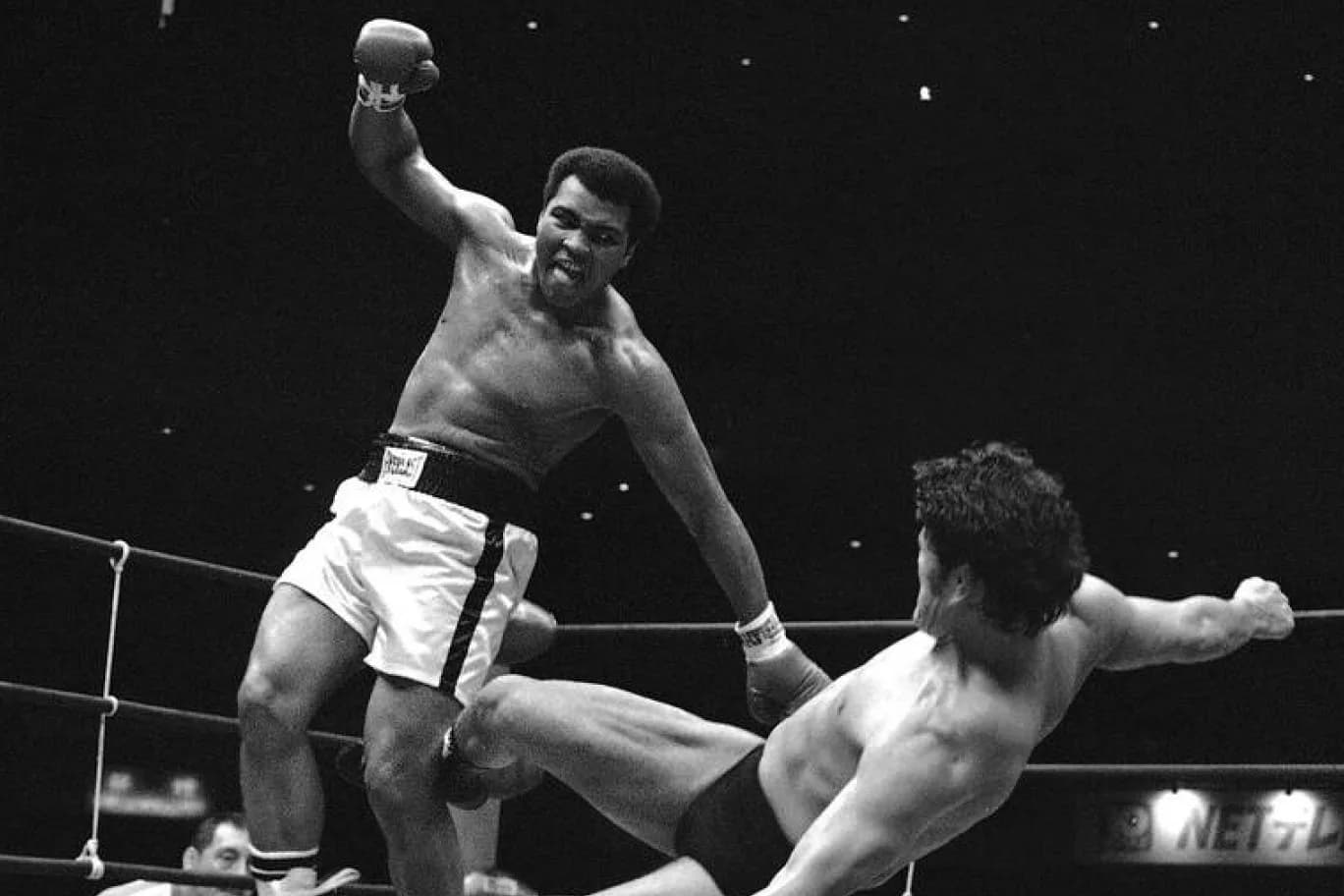
Japan had its own history of mixed-rules fighting, running from Antonio Inoki's bout with Muhammad Ali in 1976 through Shooto and Pancrase, and it had an audience that wanted to see whether the Brazilian family were what the tapes said. Vale Tudo Japan, an eight-man, one-night tournament, gave Rickson the format the UFC had given Royce. On 29 July 1994 in Tokyo he won it, finishing three opponents in one night. On 20 April 1995 he won it again, finishing with a choke on Yuki Nakai, a small, brave Shooto fighter who had been half-blinded by an eye gouge earlier in the evening and had fought on to the final anyway. The documentary Choke (1999) follows Rickson through that second tournament, training at home in Los Angeles and fighting in Tokyo, and remains the best film record of him in his prime.
The bigger stage arrived in 1997. Japanese promoters wanted to build a new organisation around a fight between Rickson and Nobuhiko Takada, the biggest star of Japanese professional wrestling, and on 11 October 1997 the first PRIDE event opened in the Tokyo Dome with that fight as its reason for existing. Rickson took Takada down and armbarred him in the first round. A year to the day later, at PRIDE 4, he did it again, more slowly. PRIDE went on without him to become the largest MMA promotion in the world for a decade, and it had been founded, in effect, to give one Gracie two nights of work.
Colosseum 2000, and after
His last fight was on 26 May 2000, again in the Tokyo Dome, against Masakatsu Funaki, a founder of Pancrase and a far more accomplished grappler than Takada. It went longer and harder than the Takada fights; Funaki was hurt badly, Rickson took his back, and the choke ended it in the first round. The professional record closed there at 11–0, every fight finished inside the distance and none of them left to a judge.
In December of the same year his eldest son, Rockson Gracie, died in New York, aged 19. Rickson did not fight again. He has said since that he had considered further fights, including one with Kazushi Sakuraba, the Japanese wrestler who beat four Gracies in 1999 and 2000, and that the loss ended the question. The fights that did not happen are, in the Japanese and Brazilian press, almost as discussed as the ones that did.
The teacher
What Rickson has done since 2000 is teach, and the teaching has a name. Invisible jiu-jitsu is his term for the mechanics underneath the technique, the base, the connection, the breath, that he says are what made his game work and what he found missing from the sport version of the art with its points and its guard-pulling. He has been a critic of that version for as long as it has existed. In 2014 he founded the Jiu-Jitsu Global Federation to promote the self-defence roots of the art, and in 2017, at a ceremony in Rio de Janeiro, he was promoted to the red belt of a ninth-degree grandmaster, having worn the red-and-black coral belt for many years before it. The promotion was widely reported and, as with his father's grade, conferred within the family's lineage.
His memoir, Breathe: A Life in Flow, written with the historian Peter Maguire and published in 2021, is the fullest account in his own words of the childhood, the fights, the choice for Denver and the years after Rockson. It is not a modest book, but it is a rare one: the family's best fighter explaining, in detail, what he thinks he did that the others did not.
Where to go next
- His father's life, and the fights that built the family name: Hélio Gracie: The Frail Brother Who Rebuilt Jiu-Jitsu.
- The art from Maeda to the IBJJF: Brazilian Jiu-Jitsu: From Maeda to the Gracies, and the BJJ hub.
- Vale tudo, PRIDE and how the Unified Rules replaced them: The History of MMA, MMA rules explained and MMA weight classes explained.
- The sambo his cousin Rolls borrowed from: Sambo vs BJJ.
- A fighter from the other end of the grappling world: Khabib Nurmagomedov: The Eagle of Dagestan.
Sources
- Rickson Gracie with Peter Maguire, Breathe: A Life in Flow (Dey Street Books, 2021)
- Roberto Pedreira, Choque: The Untold Story of Jiu-Jitsu in Brazil, Volume 3, 1961–1999 (GTR Publications, 2015)
- Sherdog – Rickson Gracie fighter record
- Choke (1999), documentary directed by Robert Raphael Goodman
- Reila Gracie, Carlos Gracie: O Criador de uma Dinastia (Record, 2008)
- Wikipedia: Rickson Gracie
- Wikipedia: Pride Fighting Championships
Frequently asked questions
- Who is Rickson Gracie?
- Rickson Gracie (born 21 November 1958 in Rio de Janeiro) is a Brazilian jiu-jitsu master and retired vale tudo and MMA fighter, the third son of Hélio Gracie. He won the Vale Tudo Japan tournaments of 1994 and 1995, beat Nobuhiko Takada at the first PRIDE events and retired unbeaten in 2000.
- What is Rickson Gracie's real fight record?
- Sherdog and other MMA databases list him at 11–0 in professional mixed-rules fights between 1980 and 2000. The family and Rickson himself have put his record across all forms of fighting, including gym challenges and sport jiu-jitsu, at around 400–0; that figure is not independently documented.
- Why did Royce, not Rickson, fight at UFC 1?
- By the family's account, Rorion Gracie chose Royce because his slighter build would make the point that technique beats size more clearly to a television audience. Rickson was widely regarded within the family as its strongest fighter.
- Who did Rickson Gracie fight in PRIDE?
- He fought Nobuhiko Takada at PRIDE 1 on 11 October 1997 and at PRIDE 4 on 11 October 1998, winning both by armbar, and Masakatsu Funaki at the Colosseum 2000 event on 26 May 2000, winning by rear-naked choke. All three fights were at the Tokyo Dome.
- What is Rickson Gracie's belt rank?
- He wore the red-and-black coral belt for many years and in 2017 was promoted to red belt, ninth degree, at a ceremony in Rio de Janeiro, as widely reported. He teaches through the Jiu-Jitsu Global Federation he founded in 2014.
- What is invisible jiu-jitsu?
- Rickson's term for the parts of the art that do not show up on a technique list: weight distribution, base, connection to the opponent and breathing. He argues these are what let a technique work against resistance, and his seminars and his book Breathe are built around them.