History
The Shaolin Temple: The Real History Behind the Legend
Founded in 495 for an Indian monk, burned by a warlord in 1928, revived by a Jet Li film: the documented history of the Shaolin Temple, legends kept apart.
9 min read · 21 September 2026 · updated 21 September 2026
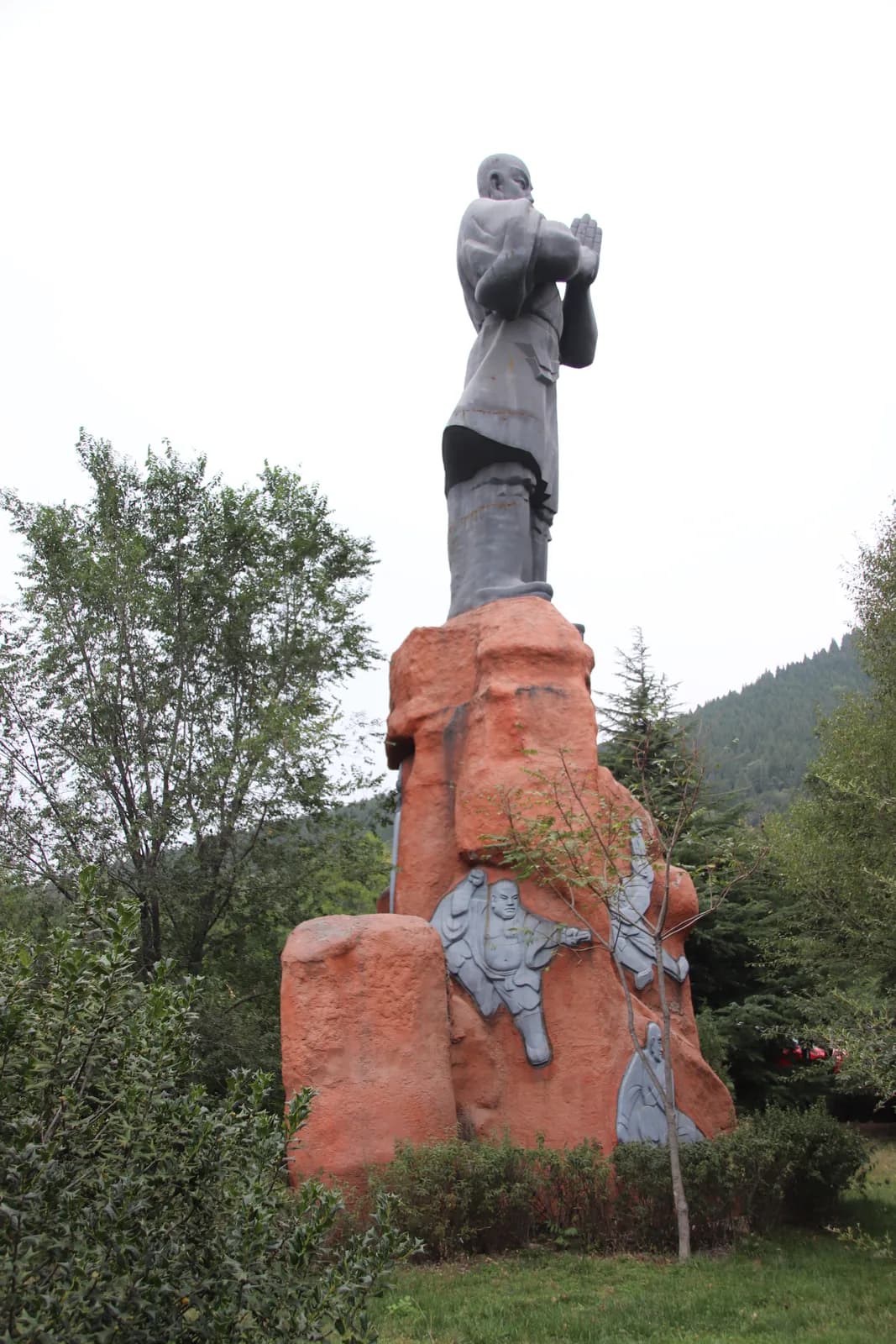
Photo: Gary Todd, public domain, via Wikimedia Commons
In this article
Timeline
- 495
Emperor Xiaowen of the Northern Wei founds a temple on Mount Song for the Indian monk Batuo, near his new capital of Luoyang.
- c. 520s
Bodhidharma, later honoured as the first patriarch of Chan Buddhism, is active in the Luoyang area; the earliest sources say nothing about fighting.
- 621
Thirteen Shaolin monks capture Wang Renze and hand him to Li Shimin, the future Tang emperor Taizong, who rewards the temple with land.
- 728
A stele is erected at Shaolin recording Li Shimin's letter of thanks and the temple's Tang privileges.
- 1553
Shaolin monks fight wokou pirates on the coast south of the Yangtze in a series of battles recorded by Ming officials.
- 1621
Cheng Zongyou publishes the Shaolin Staff Method, the first detailed manual of the temple's fighting technique.
- 1624
The Yijin Jing, the text that first credits Bodhidharma with a system of exercises, carries a preface dated to this year; scholars consider it a forgery.
- 1704
The Kangxi emperor writes the calligraphy for the temple's gate plaque.
- 1750
The Qianlong emperor visits Shaolin and spends the night, composing poems on the temple.
- 1928
The warlord Shi Yousan sets fire to the temple; the blaze destroys the library, the main halls and most of the archive.
- 1982
The film Shaolin Temple, starring the young wushu champion Jet Li, is released and sets off a wave of interest across China.
- 1999
Shi Yongxin is installed as the temple's abbot and expands its trademarks, companies and touring shows.
- 2010
UNESCO inscribes the Historic Monuments of Dengfeng, including the Shaolin buildings and the Pagoda Forest, on the World Heritage List.
- 2025
Shi Yongxin is placed under investigation and removed; Shi Yinle, abbot of the White Horse Temple, is named his successor.
There is a stone at Shaolin, carved in 728, on which a prince thanks a monastery for going to war. The prince was Li Shimin, who would become the Tang emperor Taizong, and the letter he wrote in 621 is addressed to the monks who had captured his enemy's nephew and handed him over. The stone is still there, on Mount Song in Henan, and it is the oldest hard evidence that the monks of Shaolin ever fought anyone. Everything older than that stone is legend. A surprising amount of what came after is too.
The short answer: the Shaolin Temple was founded in 495 by an emperor for an Indian monk, became the birthplace of Chan Buddhism, fought for the Tang in 621 and for the Ming in the 1550s, was not burned by the Qing, was burned by a warlord in 1928, and was rebuilt as a national symbol after a film in 1982 made it the most famous monastery on earth. What follows keeps the documented history apart from the stories told about it, which is harder than it sounds, because the stories are older than most of the buildings.
Key facts
- Founded
- 495, by Emperor Xiaowen of the Northern Wei, for the monk Batuo
- Location
- Shaoshi peak of Mount Song, Dengfeng, Henan, China
- Religious role
- Cradle of Chan (Zen) Buddhism; Bodhidharma honoured as first patriarch
- Earliest fighting record
- Stele of 728 recording thirteen monks' service to Li Shimin in 621
- Signature weapon
- The staff (gun), documented in Ming sources; hand combat from the late Ming
- Destroyed
- 1928, by the warlord Shi Yousan; UNESCO World Heritage since 2010
A temple for a foreign monk
In 494 the Northern Wei emperor Xiaowen moved his capital south to Luoyang, in the heart of the old Chinese world, and set about making his dynasty of northern horsemen look Chinese. Buddhism was part of the programme. The following year he ordered a monastery built on the wooded slopes of Mount Song, about 80 km (50 miles) from the new capital, for an Indian meditation master the Chinese called Batuo. The site lay below the Shaoshi peak, in young forest; the name Shaolin means, more or less, the temple in the woods of Shaoshi.
Batuo's monks translated sutras and sat in meditation. Nothing in the record suggests they did anything else. Mount Song was already one of China's five sacred mountains, and the temple grew as imperial foundations do, with land, tenants and the attention of the court. It was a good address. Within a generation it would acquire the visitor who made it famous.
Nine years facing a wall
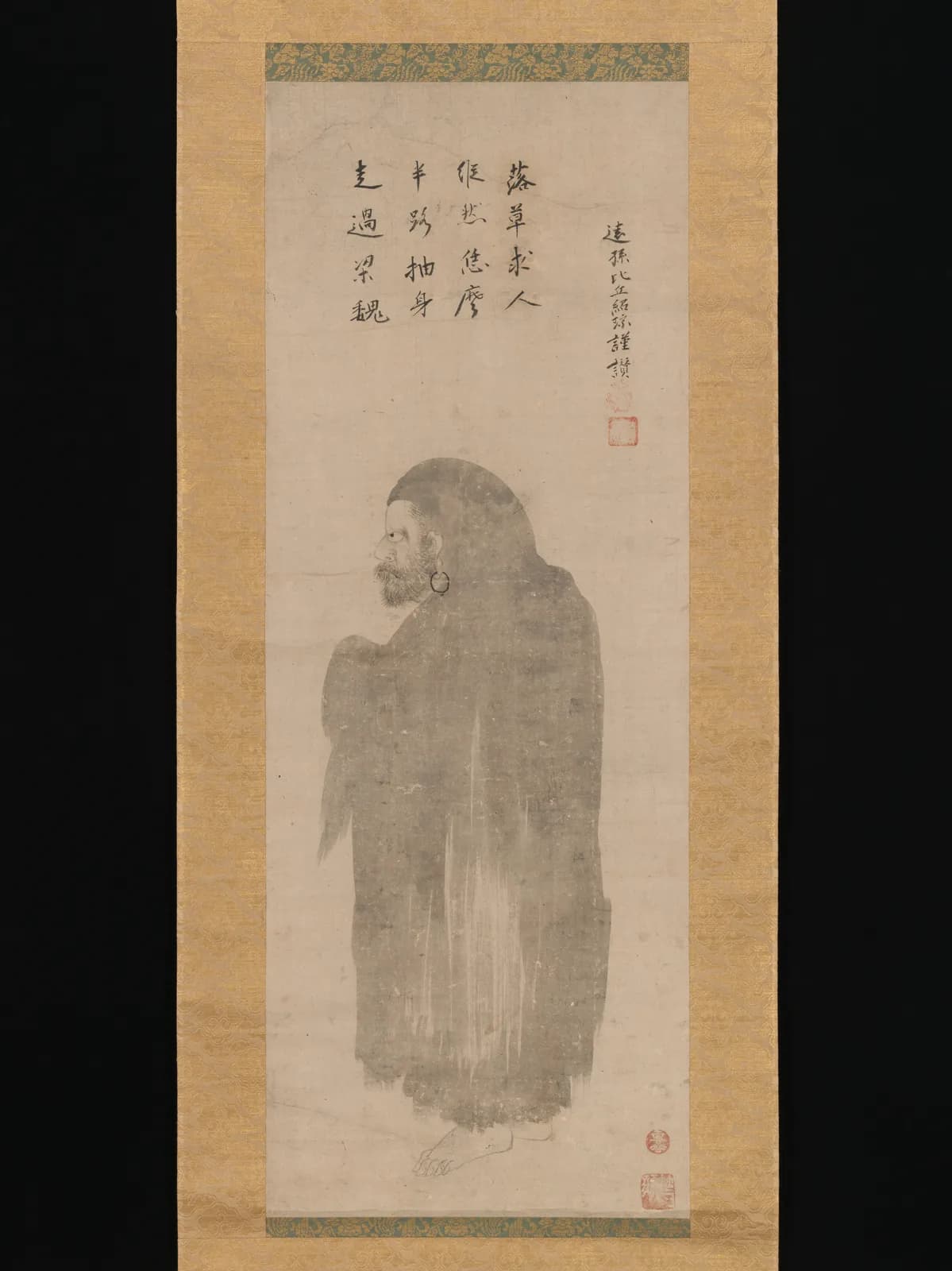
The story everyone knows goes like this. An Indian prince turned monk named Bodhidharma crossed to China, was rebuffed by an emperor, walked to Shaolin, sat facing a cave wall for nine years, and, finding the monks too weak to meditate, taught them exercises that became kung fu. It is a fine story. Historians think about half of it is true, and not the half about the exercises.
Bodhidharma existed. A description of Luoyang written in 547 mentions a monk of that name admiring a pagoda in the city, and a collection of monks' biographies from 645 gives him a short life. Chan Buddhism, the school of sudden insight that the Japanese call Zen, honours him as its first patriarch, and Shaolin, where his disciple Huike is said to have studied, has been called the cradle of Chan for more than a thousand years. That part of the temple's fame rests on solid ground.
The exercises do not. The text that credits Bodhidharma with a training system, the Yijin Jing or Muscle Change Classic, carries a preface dated 1624 and prefaces by two Tang and Song generals who, on inspection, never wrote them. The historian Meir Shahar, whose 2008 study of the monastery is the standard account, treats it as a late Ming forgery that was later folded into the temple's legend. Nobody in the Tang, the Song or the Yuan dynasties wrote a word connecting Bodhidharma with fighting. The monks fought, when they fought, for reasons that had nothing to do with him.
Thirteen monks and a prince
The reasons began in 621. China was coming apart in the fall of the Sui dynasty, and a warlord named Wang Shichong had seized Luoyang and, with it, an estate at Cypress Valley that belonged to Shaolin. The Tang prince Li Shimin was besieging the city. Thirteen monks, led by one named Tanzong, took the estate back, captured Wang's nephew Wang Renze and delivered him to the prince's camp. Li Shimin's letter of thanks, dated the same year, survives on the 728 stele, along with the reward: the estate returned, a mill, and for Tanzong the rank of general. The temple kept the letter as a title deed, which is why we have it.
This is the origin of the tale of the thirteen staff-wielding monks who saved the Tang emperor, retold in every kung fu film set in the period. The stele does not say what weapons they used. It does establish that the monks of Shaolin, within two centuries of the founding, owned land worth fighting for and were prepared to fight for it, and that the dynasty that ruled China for the next three hundred years owed them a favour. Both facts mattered more than any technique.
The staff, the pirates and the Ming
The period when Shaolin's fighting is best documented is the sixteenth century, and the weapon is the staff. In 1553 wokou pirates, mixed bands of Japanese and Chinese raiders, were ravaging the coast south of the Yangtze, and the officials charged with stopping them called on monks. Ming sources describe a force of about 120 Shaolin and other monks who fought at least four engagements that year, the largest at Wengjiagang near modern Shanghai, where the chronicles claim more than a hundred pirates killed for the loss of four monks. The monks fought with iron staffs.
The generals who fought that war took the temple seriously. Qi Jiguang, who wrote the Ming army's standard training manual, listed the Shaolin staff among the methods worth knowing. Yu Dayou, who visited the temple around 1560, was less impressed: he wrote that the monks had lost the true transmission of the staff, and took two of them away to his army for three years to learn it properly. The temple's method was finally written down in 1621 by a lay student named Cheng Zongyou, whose Shaolin Staff Method is the earliest detailed manual of the temple's fighting.
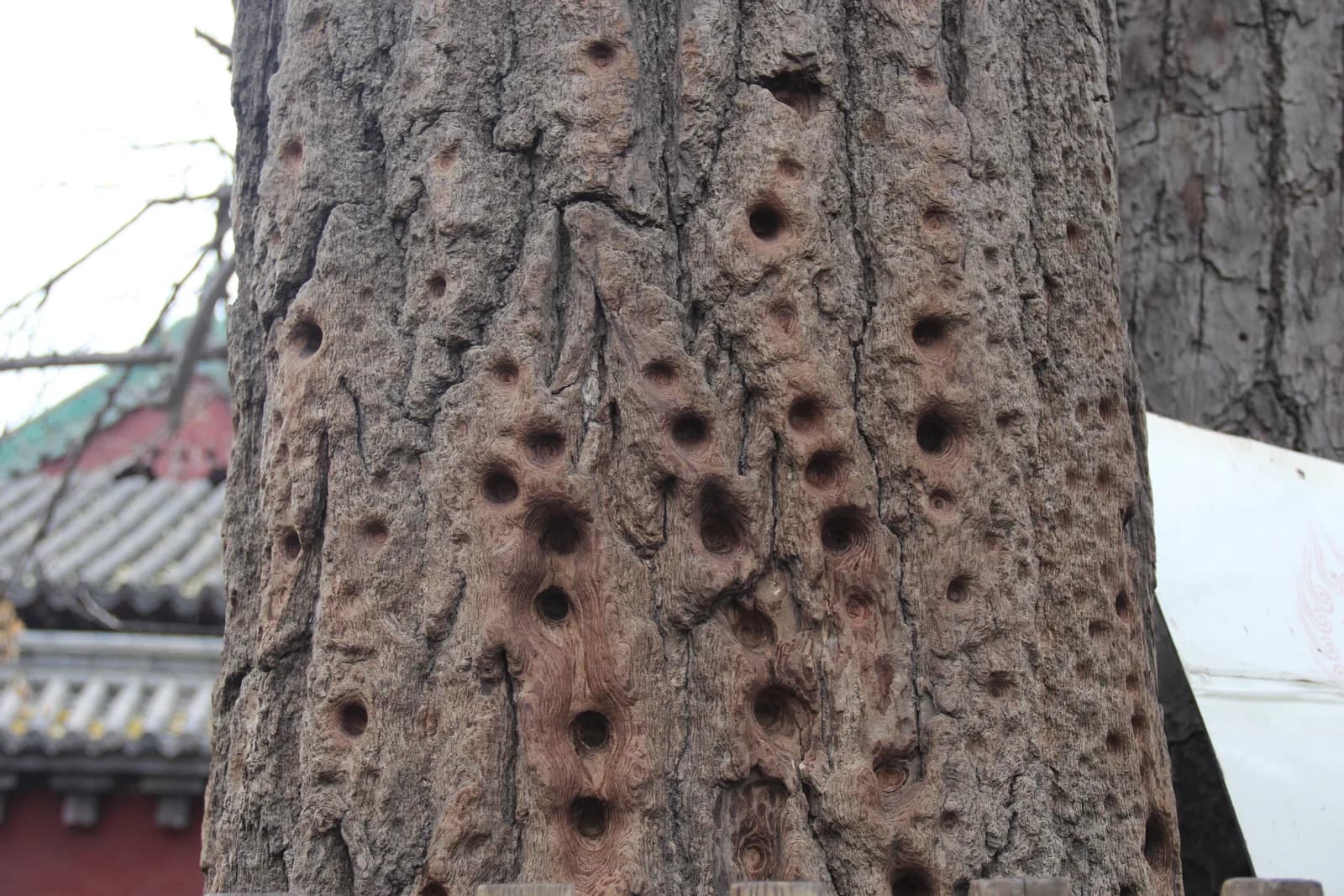
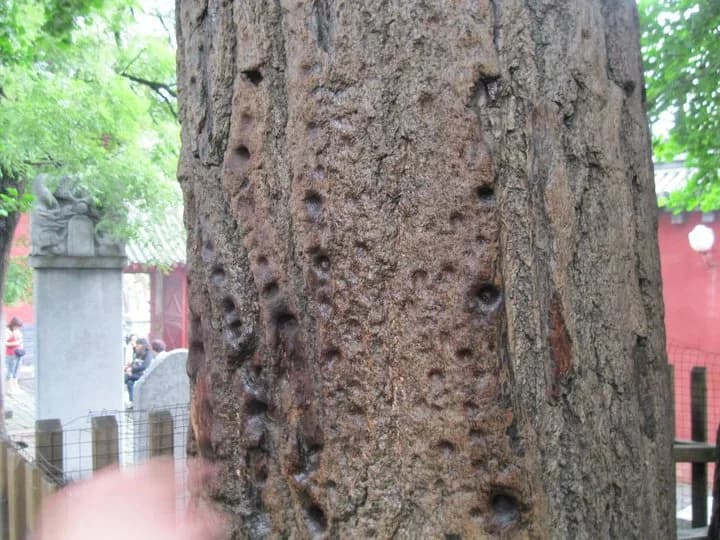
Bare-handed boxing came late. Shahar's reading of the sources is that the monks took up unarmed fighting in the last decades of the Ming, in the same period that the Yijin Jing was written, and that the two things went together: a monastery famous for the staff, adding hand combat and a legend to explain it. The Thousand Buddha Hall, built in 1588, belongs to those years. Its brick floor is pitted with shallow depressions that the temple attributes to centuries of monks stamping through their forms. Whether feet or subsidence made them, they are the most photographed floor in Chinese martial arts.
The burning that never happened, and the one that did
The Qing emperors, in the record, were patrons. The Kangxi emperor wrote the calligraphy for the temple's gate plaque in 1704; the Qianlong emperor visited in 1750, stayed the night and wrote poems about it. Qing officials were periodically nervous about monks who trained with weapons, and said so in memorials, but the temple stood through the dynasty's 268 years with its halls intact.
It did not survive the Republic. In the 1920s Henan was warlord country, and the temple's abbot Miaoxing had thrown in with one faction, leading monks into battle and dying in it in 1927. The following spring a rival general, Shi Yousan, took Dengfeng, and in March 1928 his troops set the monastery alight. The fire burned for weeks. It took the Hall of the Heavenly Kings, the Great Hall, the library with its manuscripts and the temple's own archive, which is one reason the history in this article leans on outside sources. The Pagoda Forest, the field of more than 200 brick tombs of eminent monks from the Tang onward, stood outside the fire and survived.
What remained after 1928 was a few halls, some monks and a name. The name would turn out to be the most valuable thing the temple owned.
A film, a bus station and an abbot with a business card
In 1982 a Hong Kong studio and the mainland authorities released Shaolin Temple, a co-production shot on location and starring an 18-year-old national wushu champion from Beijing named Li Lianjie, better known as Jet Li. It was a colossal success in a country that had barely seen martial arts films, and it did for Dengfeng what Rocky did for the Philadelphia art museum steps. Within a decade the roads around the temple were lined with private wushu schools, some of them teaching thousands of children, and the town lived on the monastery's name.
The man who organised the name was Shi Yongxin, who took over management of the temple in the late 1980s and was installed as abbot in 1999. He registered the Shaolin trademarks, set up companies to license them, sent troupes of performing monks on world tours, opened cultural centres abroad and welcomed presidents, film stars and heads of state to Mount Song. Admirers called him the man who rebuilt Shaolin; critics called him the CEO monk. The temple's core buildings and the Pagoda Forest were inscribed by UNESCO in 2010 as part of the Historic Monuments of Dengfeng. In 2025 the temple announced that Shi Yongxin was under investigation, the Buddhist Association of China cancelled his ordination, and a new abbot, Shi Yinle of the White Horse Temple in Luoyang, was named to succeed him.
The monastery he leaves has a school, a stream of tourists and a legend that has outlived every fire. The stone of 728 is still there too, in a courtyard, doing what it has done for thirteen centuries: proving that the monks once fought, and declining to say how.
Where to go next
- The kung fu discipline hub collects the styles, the training articles and the gear.
- The wider story of Chinese fighting, of which Shaolin is one chapter: The History of Kung Fu.
- A southern style with its own foundation legend, told with the same caution: The History of Wing Chun.
- How the Chinese arts compare with the Okinawan one they helped shape: Kung Fu vs Karate.
Sources
- Meir Shahar, The Shaolin Monastery: History, Religion, and the Chinese Martial Arts (University of Hawai'i Press, 2008)
- Peter Lorge, Chinese Martial Arts: From Antiquity to the Twenty-First Century (Cambridge University Press, 2012)
- Stanley E. Henning, “The Chinese Martial Arts in Historical Perspective”, Military Affairs 45 (1981)
- UNESCO World Heritage Centre – Historic Monuments of Dengfeng in “The Centre of Heaven and Earth”
- Encyclopaedia Britannica – Bodhidharma
- Wikipedia: Shaolin Monastery
Frequently asked questions
- When was the Shaolin Temple founded?
- In 495, by order of Emperor Xiaowen of the Northern Wei dynasty, for the Indian monk Batuo. It stands on Mount Song near Dengfeng in Henan province, about 80 km (50 miles) from the old capital of Luoyang.
- Did Bodhidharma really invent Shaolin kung fu?
- There is no evidence that he did. Bodhidharma was a real monk of the early sixth century honoured as the founder of Chan Buddhism, but the text that credits him with exercises, the Yijin Jing, dates from the seventeenth century, more than a thousand years after his death.
- Were Shaolin monks really warriors?
- Yes, at certain periods. A stele of 728 records thirteen monks who fought for the future Tang emperor in 621, and Ming sources describe monks fighting pirates with staffs in the 1550s. Bare-handed boxing at the temple is documented only from the late Ming onwards.
- Was the Shaolin Temple burned down by the Qing?
- The temple in Henan was not. The story of a Qing army burning a Shaolin temple and five monks escaping comes from the founding myth of the Heaven and Earth Society, a secret society, and no historical record supports it. The real destruction came in 1928, when the warlord Shi Yousan set the temple on fire.
- Can you train at the Shaolin Temple today?
- The temple itself is a working monastery and a tourist site. Most foreigners who go to train enrol at one of the private wushu schools around Dengfeng, which are run independently of the monastery, or attend courses offered by the temple's own cultural centres.
- Is the Shaolin Temple a UNESCO site?
- Yes. In 2010 UNESCO inscribed the Historic Monuments of Dengfeng, a group of buildings on and around Mount Song that includes the Shaolin Temple's core buildings and the Pagoda Forest of monks' tombs.