History
The History of Kung Fu: Shaolin, Family Styles and Modern Wushu
How Chinese martial arts grew from army drill and Shaolin legend into hundreds of styles, survived rebellion and revolution, and became wushu and cinema.
10 min read · 20 September 2026 · updated 21 September 2026
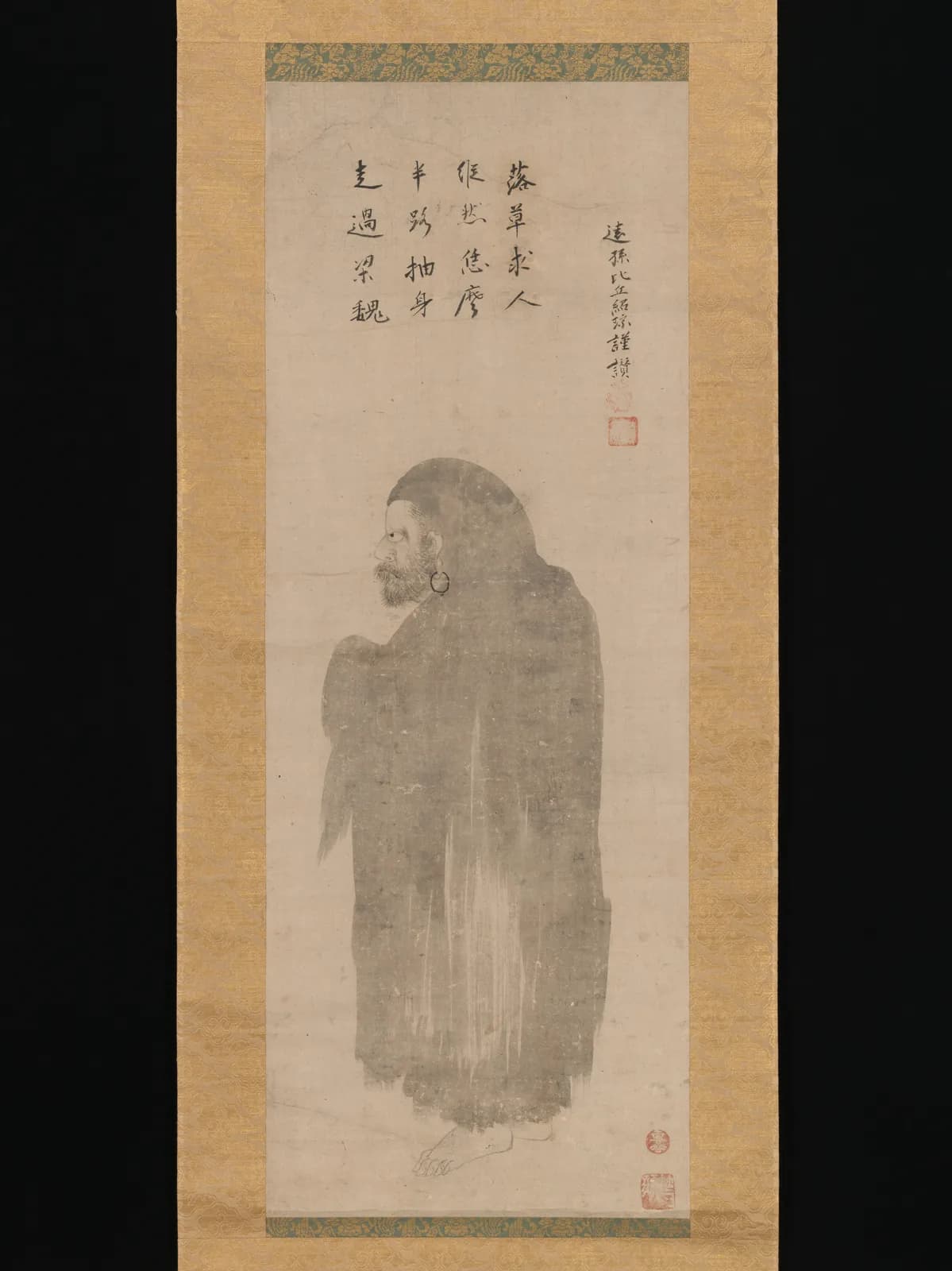
Photo: Bodhidharma by Unkoku Tōgan, late 16th century. Metropolitan Museum of Art, public domain.
In this article
Timeline
- c. 500 BC
Chinese texts describe wrestling (jiao di) and archery as part of military training; boxing is mentioned in the Han histories from the 2nd century BC.
- 495
The Shaolin Monastery is founded on Mount Song in Henan. The legend that Bodhidharma taught its monks exercises is a much later addition.
- 621
Thirteen Shaolin monks help the future Tang emperor Li Shimin in battle – recorded on a stele of 728, the earliest firm evidence of fighting monks.
- 1560s
General Qi Jiguang's Jixiao Xinshu describes boxing as training for soldiers and names sixteen contemporary styles.
- 17th–19th c.
The great family and regional styles take shape under the Qing: taijiquan, xingyiquan, baguazhang in the north; Hung Ga, Choy Li Fut, Wing Chun in the south.
- 1899–1901
The Boxer Rebellion. Martial-arts societies convinced of their invulnerability attack foreigners; the defeat discredits traditional boxing for a generation.
- 1910
The Jingwu Athletic Association is founded in Shanghai around Huo Yuanjia, teaching styles openly to the public for the first time.
- 1928
The Nationalist government opens the Central Guoshu Institute in Nanjing and holds national examinations; the Shaolin Monastery is burned by a warlord's army the same year.
- 1949
The People's Republic reorganises martial arts as wushu, a performance sport with compulsory routines; traditional teaching is restricted, most severely during the Cultural Revolution (1966–1976).
- 1971–1973
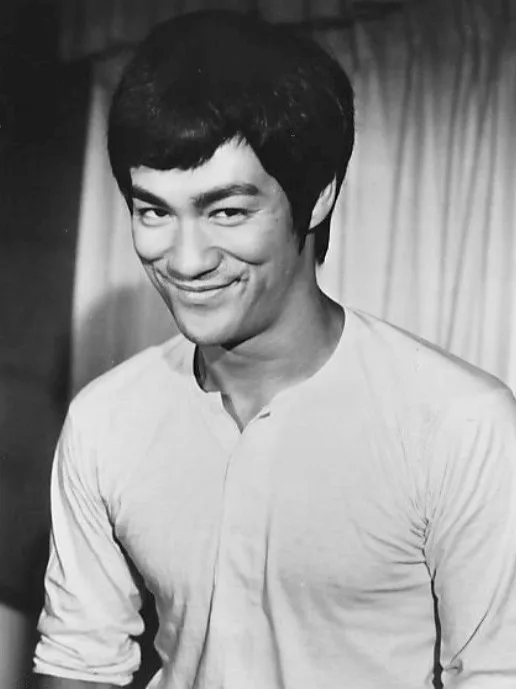
Bruce Lee's films make kung fu a worldwide word; he dies in Hong Kong in July 1973.
- 1982
The film Shaolin Temple, with Jet Li, triggers a martial-arts revival in mainland China.
- 1990
The International Wushu Federation is founded in Beijing; the first World Wushu Championships follow in 1991.
- 2008
Wushu is held as a tournament alongside the Beijing Olympics but not as an Olympic event.
In 621, in the civil wars that made the Tang dynasty, a party of monks from a monastery on Mount Song in Henan captured a rebel general and delivered him to the future emperor Li Shimin. Tradition says there were thirteen of them. The emperor paid the monastery in land and in an official pardon for its fighting, and in 728 the monks had the episode carved into a stone stele at Shaolin. It is the earliest hard evidence anywhere in China of monks trained to fight. Bodhidharma is not in it.
The short answer: kung fu is not one art but a family of hundreds of Chinese fighting styles, and its history is older and better documented than its legends. Chinese soldiers drilled in wrestling and boxing more than two thousand years ago; the Ming general Qi Jiguang wrote the first surviving survey of boxing styles in the 1560s; the great family systems – taijiquan, Hung Ga, Wing Chun and the rest – took shape under the Qing. In the 20th century the arts were nearly destroyed by rebellion, war and revolution, rebuilt as the sport of wushu, and made world-famous by Hong Kong cinema and Bruce Lee. Here is that story, with the temple legends kept apart from what the records show.
Key facts
- Term
- Gongfu (“skill through effort”); wushu (“martial arts”) is the Chinese name
- Earliest records
- Wrestling and boxing in military training, Zhou and Han dynasties
- Shaolin
- Monastery founded 495; fighting monks recorded 621; staff methods, Ming dynasty
- First style survey
- Qi Jiguang, Jixiao Xinshu, 1560s – sixteen boxing styles
- Modern turning points
- Jingwu 1910, Central Guoshu Institute 1928, wushu sport 1950s, IWUF 1990
- Global fame
- Bruce Lee and Hong Kong cinema, 1970s; Shaolin Temple film, 1982
A soldier's skill and a court's entertainment
Chinese records of unarmed fighting are as old as Chinese records. Bronze Age texts describe jiao di, a form of wrestling, as military exercise and as entertainment at court. The Han histories of the 2nd century BC mention boxing manuals in the imperial library, every one of them since lost, and the Book of Han lists “hand fighting” among the military arts. What any of it looked like, nobody knows. The vocabulary, though – wrestling, striking, weapons drill – was in place before the Common Era, and so was the setting: fighting was a soldier's skill and, at court, a show.
For the next two thousand years the organising principle of Chinese martial arts was the army. Dynasties trained conscripts and professionals in spear, sword, halberd, bow and unarmed combat, and a martial examination system, parallel to the civil one, ran from the Tang dynasty (established 702) until 1901. Boxing had its place in that system as preparation for weapons and as a test of nerve. The surviving military manuals treat it as exactly that.
Shaolin: the staff first, the story later
The Shaolin Monastery was founded on Mount Song in 495, under the Northern Wei dynasty, and became a centre of Chan (Zen) Buddhism. Its martial fame rests on the real event of 621 and the stele of 728, and on what the monks did with that reputation over the next thousand years. What they mostly did was fight with the staff. Ming writers of the 16th century describe Shaolin staff fighting as the best in China, and in the 1550s monks were recruited to fight Japanese pirates on the coast. The monastery's boxing came later. The historian Meir Shahar has shown that Shaolin's empty-hand styles developed mainly in the late Ming and Qing periods, absorbing techniques from the surrounding countryside and exporting them again.
The legend runs the other way. According to a text called the Yijin Jing (“Muscle-Tendon Change Classic”), the Indian monk Bodhidharma, who brought Chan to China in the 5th or 6th century, found the Shaolin monks too weak to meditate and taught them exercises from which every martial art descends. The Yijin Jing first appears in the 17th century, with a preface forged in the name of a Tang general, and no earlier source connects Bodhidharma with fighting of any kind. The story spread through 20th-century novels and films and is now told at the temple itself. The scholars who have studied it use a shorter word: myth.
The general who thought boxing was useless in battle
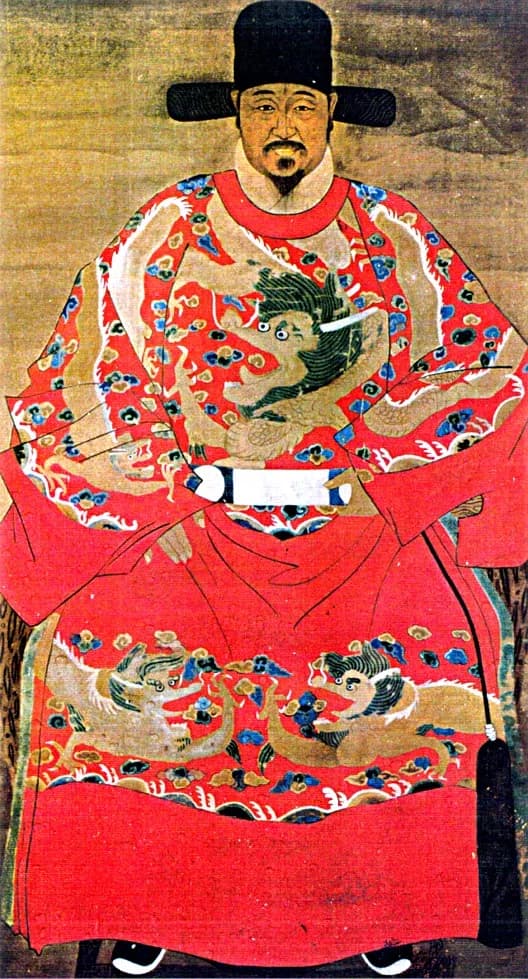
The first surviving Chinese analysis of boxing styles was written by a soldier, and the soldier was not impressed. Qi Jiguang (1528–1588), the general who defeated the pirates raiding the Ming coast, wrote a training manual, the Jixiao Xinshu (“New Treatise on Military Efficiency”), in the 1560s. Its boxing chapter names sixteen contemporary styles, one of them a “Long Fist” attributed to the founder of the Song dynasty, sets out thirty-two postures with verses and pictures, and states plainly that boxing is of little use in battle but excellent for making soldiers agile and brave. Later writers copied his postures, and two centuries on some of them turn up, sometimes under their own names, in the taijiquan forms of the Chen family.
The Ming also produced the first martial-arts books written for civilians and the first written theory of “internal” practice. Then, in 1644, the dynasty fell, and its loyalists went into secret societies and the countryside. The age of styles was about to begin.
Two centuries of families and villages
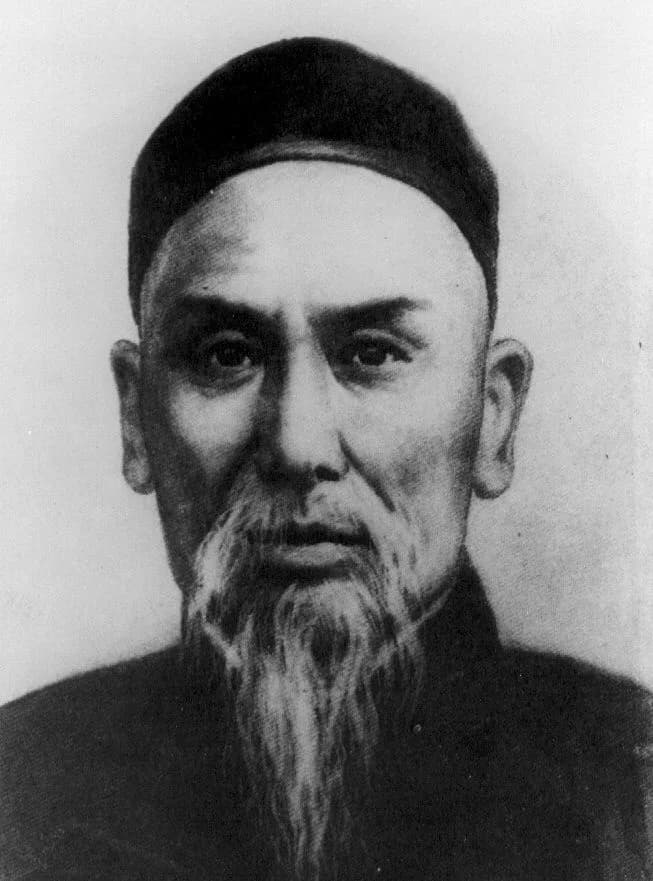
Most of the kung fu taught today was shaped between the 17th and 19th centuries, under the Qing. In the north, the Chen family of Chenjiagou village in Henan practised a boxing that became taijiquan. Yang Luchan (1799–1872) learned it, carried it to Beijing, taught it to Manchu nobles and founded the Yang style that most of the world now practises for its health. Xingyiquan (“form-intention boxing”) and baguazhang (“eight-trigram palm”, created by Dong Haichuan in the mid-19th century) would be grouped with it in the 20th century as the “internal” family. Northern Shaolin, Praying Mantis, Eagle Claw and dozens of other “external” northern styles travelled with caravan guards, militia instructors and itinerant teachers.
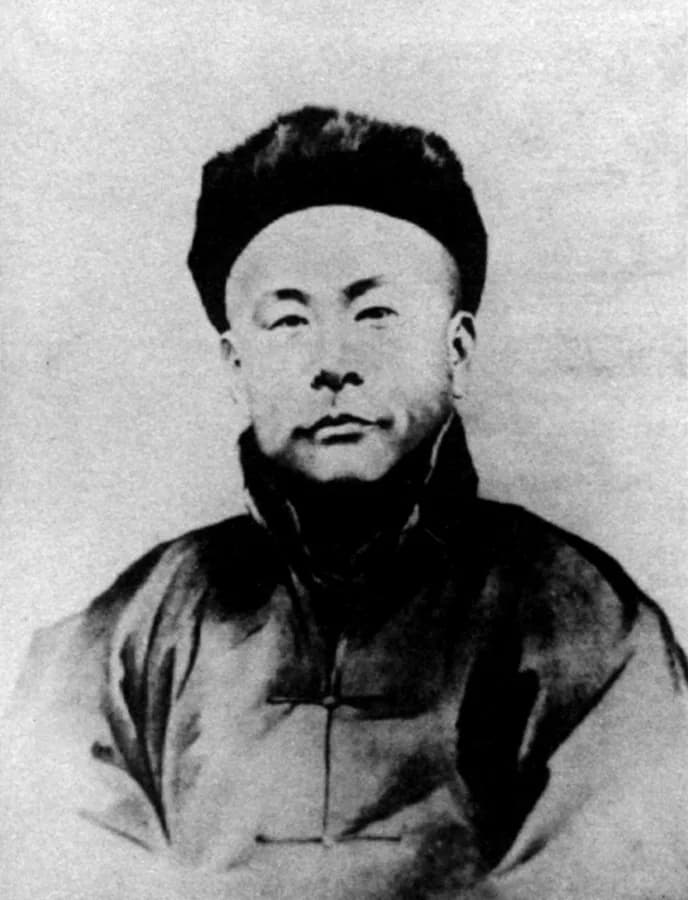
In the south, Guangdong province and the city of Foshan produced the styles that Hong Kong would later show the world. Hung Ga, attributed to Hung Hei-gun and made famous by Wong Fei-hung (1847–1925), a physician and militia instructor in Foshan and Canton. Choy Li Fut, founded by Chan Heung in 1836. And Wing Chun, a compact close-range system that legend traces to a Buddhist nun, Ng Mui, and history traces to Foshan teachers such as Leung Jan in the late 19th century. Wing Chun's most famous teacher, Ip Man (1893–1972), fled to Hong Kong in 1949 and took students there. One of them was a teenager named Bruce Lee.
The styles moved through the institutions of Qing society: family lineages, village militias, guilds, opera troupes and the secret societies that opposed the Manchu dynasty. That last connection ended in catastrophe. In 1899 and 1900 the Yihequan, the “Righteous and Harmonious Fists”, a movement of martial-arts societies convinced that their rituals made them immune to bullets, attacked missionaries and foreigners across northern China and besieged the legations in Beijing. An eight-nation army crushed the Boxer Rebellion, the court that had backed it was humiliated, and for a generation of educated Chinese boxing became a byword for superstition and backwardness. The rituals had not stopped the bullets.
Modernise or disappear
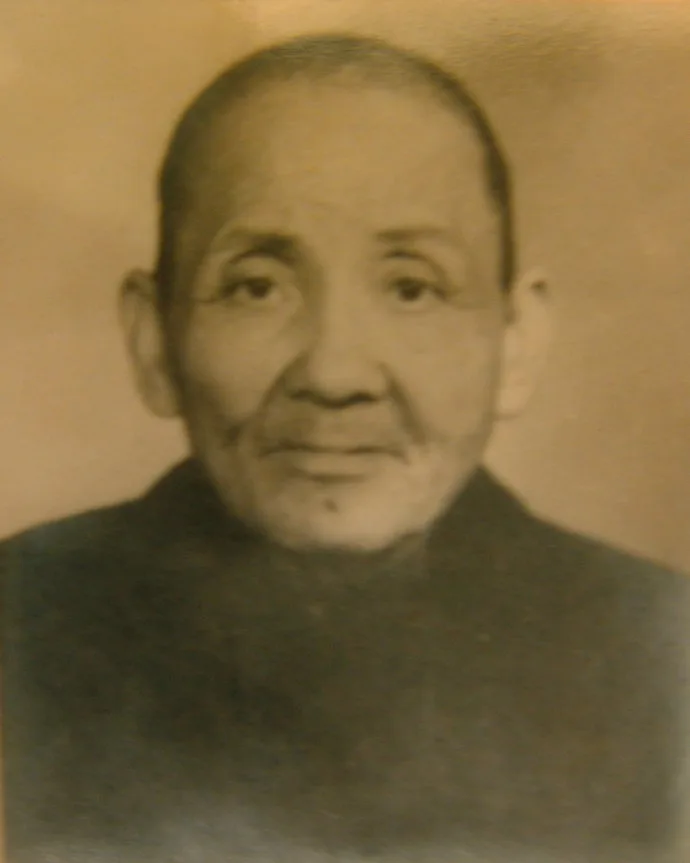
The answer to the humiliation was to modernise. In 1910 a group of Shanghai businessmen and reformers founded the Jingwu Athletic Association around Huo Yuanjia (1868–1910), a fighter from Tianjin famous for challenge matches against foreign strongmen. Jingwu did what no lineage had done. It taught several styles side by side, to anyone who paid a fee, in classes with a syllabus, and it opened branches across China and Southeast Asia. Its idea – martial arts as public physical education for a modern nation – became the template for everything that followed. Huo died the year it opened and went on to a long second career on screen, from Fist of Fury (1972) to Fearless (2006).
The Nationalist government went further. In 1928 it founded the Central Guoshu Institute in Nanjing – guoshu, “national art”, was the new official term – with the general Zhang Zhijiang as director and separate departments for Shaolin and Wudang (internal) styles. The institute held national examinations in 1928 and 1933 with full-contact boxing, wrestling and weapons, trained teachers for schools and the army, and sent a demonstration team to the Berlin Olympics in 1936. In the year it opened, a warlord's troops burned the Shaolin Monastery, most of its buildings and its library with it. The temple would take half a century to recover.
Wushu, the Cultural Revolution and a man from Hong Kong
The Communist victory in 1949 changed the arts again. The new state kept Jingwu's idea of martial arts as physical culture, removed the lineages, the secret societies and the religion, and created wushu as a performance sport: standardised routines in Changquan (long fist), Nanquan (southern fist) and taijiquan, judged for form, difficulty and expression as gymnastics is, under a Chinese Wushu Association founded in 1958. Traditional teachers were tolerated, and then, in the Cultural Revolution of 1966 to 1976, persecuted. Many fled to Hong Kong, Taiwan and Southeast Asia, which is why so much traditional kung fu survived outside the mainland.
Hong Kong is also where the world learned the word. Cantonese cinema had been making martial-arts films since the 1940s, more than a hundred of them about Wong Fei-hung alone. Then, in the early 1970s, Bruce Lee (1940–1973), Ip Man's Wing Chun student who had gone on to build his own method, Jeet Kune Do, made four films that turned “kung fu” into an international word and the martial-arts film into a global genre. He died in July 1973, aged 32, six days before Enter the Dragon opened. Jackie Chan, Sammo Hung and the Shaw Brothers studio carried the genre on, and in 1982 a mainland co-production, Shaolin Temple, starring the wushu champion Jet Li, drew tens of millions of Chinese viewers and set off a revival of the temple, of traditional teaching and of wushu schools across the country. A warlord had burned the monastery in 1928. A film brought it back.
Four tracks
The Chinese arts now run on four tracks. Traditional styles, taught in lineages in China, Hong Kong, Taiwan and the diaspora, keep the forms, weapons and applications of the Qing era; taijiquan alone is practised by tens of millions for their health. Sport wushu, governed by the International Wushu Federation founded in Beijing in 1990, has two branches: taolu, the judged routines, and sanda, a full-contact fighting sport with punches, kicks and throws that has produced several successful kickboxers and MMA fighters. The IOC recognised the IWUF in 1999; wushu was held as a side tournament at the Beijing Olympics in 2008 and was included in the Youth Olympic Games for Dakar 2026, but it has not reached the main Olympic programme. And Shaolin itself, rebuilt since the 1980s, runs a warrior-monk troupe, licenses its name around the world and sits among the commercial schools of Dengfeng, which count their students in the tens of thousands.
The tension that runs through the whole story – the art as fighting against the art as culture, the lineage against the state, what the record shows against what the legend says – has not gone anywhere. Anyone who trains a Chinese style today inherits both sides of it. The thirteen monks and Bodhidharma share the same temple.
Where to go next
- The kung fu / wushu discipline hub and the Wing Chun hub collect everything on the site about the Chinese arts.
- The Okinawan art that grew from Fujian boxing: The History of Karate.
- Wrestling, the oldest recorded Chinese and Greek contest: The History of Wrestling.
- Purposeful solo practice, the heart of forms training: Shadow Boxing With Purpose.
Sources
- Meir Shahar, The Shaolin Monastery: History, Religion, and the Chinese Martial Arts (University of Hawai'i Press, 2008)
- Peter Lorge, Chinese Martial Arts: From Antiquity to the Twenty-First Century (Cambridge University Press, 2012)
- Brian Kennedy & Elizabeth Guo, Chinese Martial Arts Training Manuals: A Historical Survey (North Atlantic Books, 2005)
- International Wushu Federation – About IWUF
- Wikipedia: Chinese martial arts
- Wikipedia: Shaolin Monastery
- Wikipedia: Jingwu Athletic Association
- Wikipedia: Wushu (sport)
Frequently asked questions
- What is the difference between kung fu and wushu?
- Gongfu (kung fu) means skill achieved through effort and can describe any accomplishment; it became the Western word for Chinese martial arts through Hong Kong films. Wushu, “martial arts”, is the term used in China, and since the 1950s it also names the standardised performance sport with compulsory routines and the full-contact discipline sanda.
- Did Bodhidharma invent kung fu at Shaolin?
- No. Bodhidharma was a Buddhist teacher of the 5th or 6th century, and the story that he taught the Shaolin monks exercises first appears in a 17th-century text, the Yijin Jing, which historians regard as a forgery. Shaolin's real martial history begins with its fighting monks of the Tang dynasty and its staff methods of the Ming.
- How many styles of kung fu are there?
- Hundreds. Chinese surveys in the 1980s catalogued more than a hundred distinct systems with many sub-styles. They are often grouped as northern and southern, or internal (taijiquan, xingyiquan, baguazhang) and external (Shaolin-derived, Hung Ga, Choy Li Fut, Wing Chun and others).
- Is Shaolin kung fu still taught at the temple?
- Yes, though with interruptions. The monastery was burned in 1928, emptied during the Cultural Revolution and revived after the 1982 film Shaolin Temple. Today it runs its own warrior-monk troupe and is surrounded by large commercial wushu schools in Dengfeng.
- Is kung fu effective for fighting?
- It depends entirely on how it is trained. Chinese styles that spar, such as sanda, Wing Chun schools that pressure-test, or taijiquan push-hands with resistance, produce fighters; styles trained only through forms do not. The history shows both: Qi Jiguang trained soldiers with boxing, and the Boxers of 1900 believed forms made them bulletproof.
- Is wushu an Olympic sport?
- Not yet. The International Wushu Federation has been recognised by the IOC, wushu was held as a side tournament at Beijing 2008, and it was included in the Youth Olympic Games for Dakar 2026, but it has not been added to the main Olympic programme.