History
The History of Kalaripayattu: Kerala's Ancient Fighting Art
How the warrior training of medieval Kerala survived British suppression and was revived as the art the world calls the mother of martial arts.
6 min read · 20 September 2026 · updated 21 September 2026
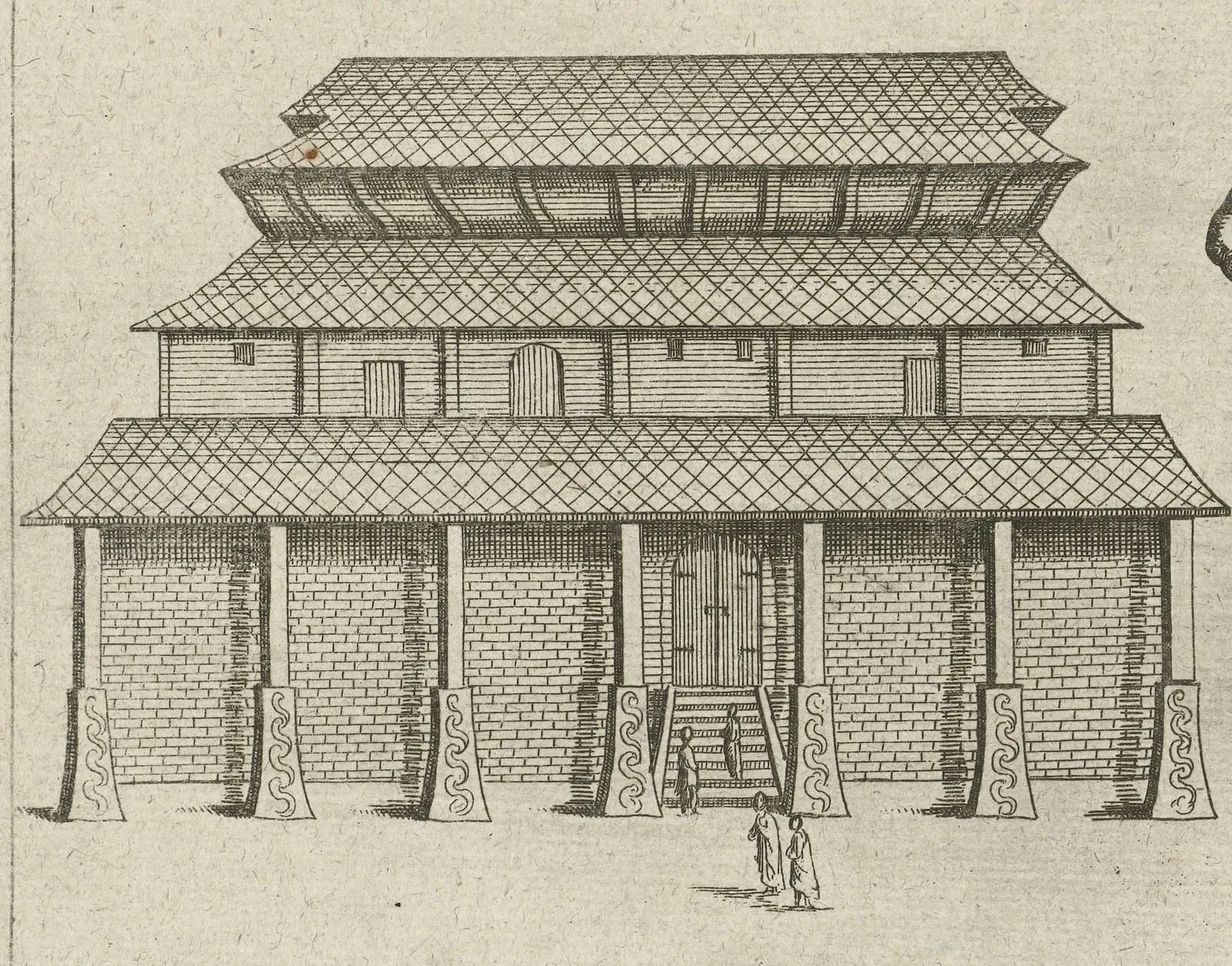
Photo: The palace of the Zamorin of Calicut, in an engraving of 1604. The Zamorins' Nair warriors trained in the kalari. Public domain, via Wikimedia Commons.
In this article
Timeline
- c. 300 BC–300 AD
Sangam-era Tamil poetry describes the warriors, weapons and duels of the south Indian kingdoms – the culture kalaripayattu claims as its root.
- 11th–12th c.
The Chera kingdom breaks up; Kerala becomes a land of small principalities whose Nair warriors are trained in village kalaris.
- 12th–16th c.
The classical age: ankam duels settle disputes between chiefs, chaver suicide squads swear vengeance, and the Vadakkan Pattukal ballads celebrate Aromal Chekavar and Unniyarcha.
- 1498
Vasco da Gama lands near Calicut; Portuguese, Dutch and later British accounts describe the Nair fighting men and their training.
- 1793–1806
After the British conquest of Malabar and the rebellions of Pazhassi Raja, the East India Company bans the carrying of arms and dismantles the kalari system.
- 19th c.
Kalaripayattu survives in secret in a few families and in the martial training of Kathakali dancers.
- 1920s–1930s
Revival: masters such as Kottakkal Kanaran Gurukkal, C. V. Narayanan Nair and Chirakkal T. Sreedharan Nair reopen kalaris and demonstrate publicly as part of the Indian nationalist movement.
- 1958
The Kerala Kalaripayattu Association is founded and organises competitions and gradings.
- 1970s–1990s
Kalaripayattu enters Indian cinema and dance, and foreign students and researchers arrive in Kerala.
- 2021
Kalaripayattu is included in the Khelo India Youth Games, its first recognition as a national-level sport.
The training hall is a hole in the ground. A kalari is dug into the earth of Kerala to prescribed dimensions, roofed with palm leaves, laid out east to west, with a shrine to the guardian deities in the south-western corner, and a Nair boy of the Middle Ages walked down into one at the age of seven and trained there until someone called him to fight. The word payattu means practice, or fight. The art is simply what happens in the pit.
It is also, if you believe the brochures, the oldest martial art in the world and the mother of all the others. No historian can support either claim. What the record does show is worth more: a warrior culture in medieval Kerala with its own duels, ballads and training halls; its suppression by the British after the conquest of Malabar; and its revival by a handful of masters in the 1920s and 1930s who reopened the pits and taught in public. This article follows the art from the courts of the Zamorins to the tourist kalaris of today, and keeps the legends where they belong.
Key facts
- Region
- Kerala, south-western India; related traditions in Tamil Nadu
- Meaning
- Kalari – the training ground; payattu – practice, fight
- Classical age
- 12th–16th centuries: Nair warriors, ankam duels, the Vadakkan Pattukal ballads
- Suppression
- British Malabar, from the 1790s: arms banned, kalaris closed
- Revival
- 1920s–1930s, Kottakkal Kanaran Gurukkal, C. V. Narayanan Nair and others
- Signature weapons
- Otta (curved stick), urumi (flexible sword), sword and shield, spear
Warriors of the south
The Tamil poetry of the Sangam age, composed between roughly 300 BC and 300 AD, sings of the warriors of the south Indian kingdoms – the Cheras, Cholas and Pandyas – with their spears, swords and bows, their duels and their heroic deaths. The Cheras ruled the coast that became Kerala, and the art's traditions look back to that world, as they do to the later Sanskrit texts on Dhanurveda, the science of arms. How much of what was practised then survived into the kalari is unknown. The word kalari comes from the Tamil for a battlefield or arena, and the mythic founders, the sage Agastya in the south and the warrior-priest Parashurama in the north, are the founders of Kerala's culture in general, not evidence of a dated system.
The documented history begins with a collapse. The Chera kingdom broke up around 1100 and Kerala became a mosaic of small principalities – the Zamorin of Calicut, the rajas of Cochin, Kolathunad and Venad, and dozens of chiefs – whose armies were the Nairs, a martial caste that sent its boys into the kalari at seven and kept them training until they were called to fight. Each village had its pit. Each pit had its gurukkal, the master, who taught fighting and treated injuries. And what came out of the pits was not only soldiers but a whole culture of the duel.
Duels to the death, and the songs about them
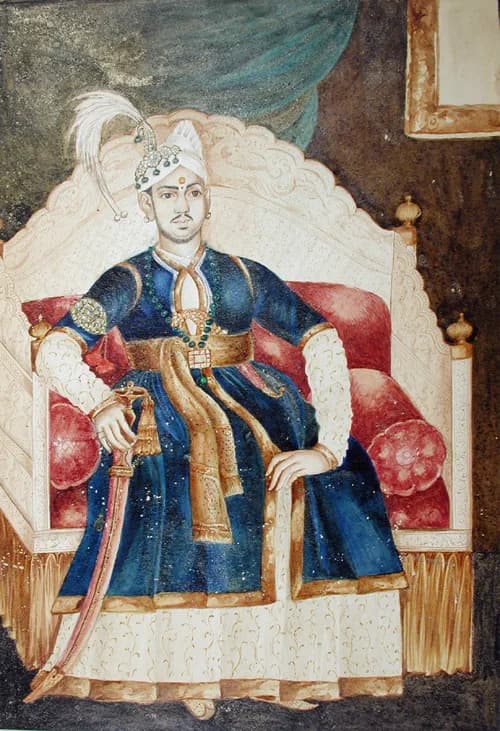
Between the 12th and 16th centuries kalaripayattu was the military system of Kerala, and its institutions were unusual. A dispute between chiefs could be settled by ankam, a duel fought to the death on a raised platform by champions – the chekavars, hired from families of professional fighters. The chaver, sworn warriors, took oaths of vengeance against the Zamorin at his great festival at Tirunavaya and attacked his guard knowing they would die. Both were sung about in the Vadakkan Pattukal, the northern ballads, and the ballads' heroes are still the art's exemplars: Aromal Chekavar, the duellist betrayed by his cousin, and his sister Unniyarcha, who fought off a gang with her urumi. The Portuguese, who arrived with Vasco da Gama at Calicut in 1498, and the Dutch and British after them, described the Nairs' agility, their swords and shields, and their habit of training in pits under the eye of a master.
The art they described had a structure it still keeps. Training moves through four stages. Meythari is the body: exercises, leg swings and animal postures. Kolthari is wood: weapons from the long staff to the short, curved otta. Ankathari is metal: dagger, sword and shield, spear, and the coiled flexible sword called the urumi, whipped rather than swung and taught last, because it is as dangerous to the user as to the opponent. Verumkai is the empty hand: locks, throws and strikes to the marma, the vital points. Alongside all of it the gurukkal taught kalari chikitsa, a system of massage, bone-setting and herbal medicine. The man who taught the village to break bones was also the man who set them.
Gunpowder, then the Company
Kalaripayattu's decline began with gunpowder and ended with the British. Firearms made the duel and the sword and shield obsolete through the 17th and 18th centuries, and when the East India Company took Malabar from Tipu Sultan in 1792 it found a countryside of armed Nairs and a revolt led by Pazhassi Raja of Kottayam, which ran, on and off, from 1793 until his death in 1805. The Company's answer was to disarm the province. Weapons were confiscated, martial training banned, the kalaris closed. Within a generation an art that had trained every Nair boy survived in a few families teaching in secret, in the ritual traditions of temple festivals and in the physical training of Kathakali dancers, whose exercises were the kalari's.
The 19th century is the art's dark age and the reason its history is so hard to write. Almost nothing was recorded, and the lineages that resumed in the 20th century could claim what they liked.
Revival
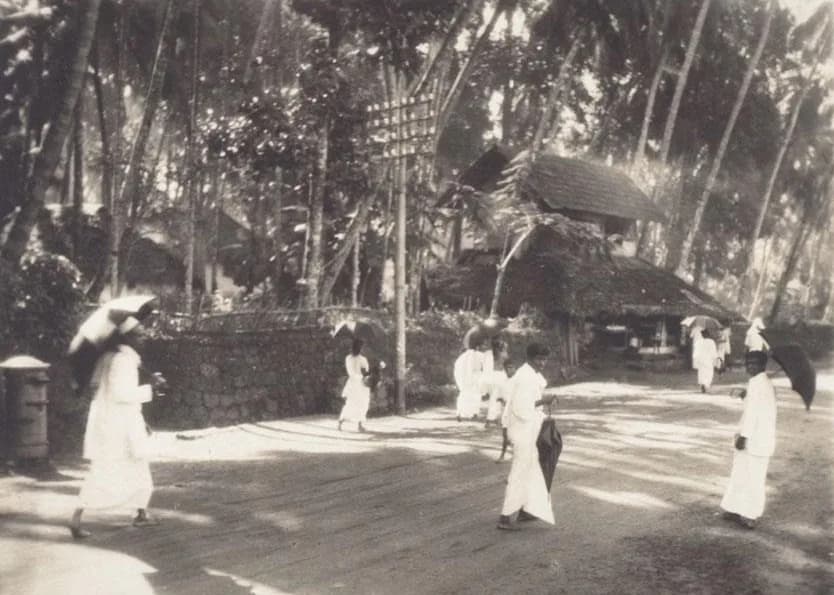
The revival was part of Indian nationalism. In the 1920s, as the independence movement looked for indigenous physical culture to set against British sport, a few surviving masters in northern Kerala reopened their kalaris and began to demonstrate in public. Kottakkal Kanaran Gurukkal was one. C. V. Narayanan Nair, whose demonstrations and articles in the 1930s gave the art its modern name in print, was another. Chirakkal T. Sreedharan Nair wrote the first manual and taught the northern style systematically. Between them they drew the line that students still argue over: the northern (vadakkan) style, with its high, flowing movements and long weapons, against the southern (thekkan) style of Travancore and Tamil Nadu, closer to the empty hand and the marma. The distinction is real. The boundary is not settled.
The Kerala Kalaripayattu Association was founded in 1958 to run competitions and gradings, and from the 1970s the art found new patrons: Indian cinema, which used it in Malayalam and Hindi films; dance and theatre, through choreographers who studied in Kerala; and foreign students and scholars, above all the American theatre researcher Phillip Zarrilli, whose two decades of training and writing produced the standard academic account. Kerala's tourism department made the kalari a visitor attraction. The myth that Bodhidharma carried the art to Shaolin and thereby fathered every Asian martial art, which has no source before the 20th century, travelled with the tourists.
Kalaripayattu today
Several hundred kalaris in Kerala, schools across India and abroad, and the beginnings of a sport: the Indian Olympic Association recognised it, and in 2021 it was included in the Khelo India Youth Games, the government's national youth competition, with events in forms and weapons. Most of its life, though, is what it was. A sunken pit. A master. A curriculum that begins with oil massage and ends with the urumi. And the ballads of Aromal Chekavar and Unniyarcha, which every student in Kerala still knows.
Where to go next
- The kalaripayattu discipline hub collects training articles, workouts and gear.
- The Chinese art the Bodhidharma legend connects it to: The History of Kung Fu.
- Another weapons-first tradition: The History of Kali, Eskrima and Arnis.
- Flexibility and body control, the meythari of the gym: Kettlebell Strength for Fighters.
Sources
- Phillip B. Zarrilli, When the Body Becomes All Eyes: Paradigms, Discourses and Practices of Power in Kalarippayattu (Oxford University Press, 1998)
- Chirakkal T. Sreedharan Nair, Kalarippayattu: The Complete Guide to Kerala's Ancient Martial Art (Westland, 2007)
- Kerala Kalaripayattu Association
- Government of Kerala, Department of Tourism – Kalaripayattu
- Wikipedia: Kalaripayattu
- Wikipedia: Vadakkan Pattukal
- Wikipedia: Nair
- Wikipedia: Pazhassi Raja
Frequently asked questions
- Is kalaripayattu really the oldest martial art?
- The claim is popular and unprovable. Kalaripayattu's culture of warrior training goes back to medieval Kerala and draws on the Sangam-era south Indian traditions, which makes it among the oldest surviving systems with a continuous identity; but no evidence supports the frequent statement that it is the source of all Asian martial arts or that Bodhidharma carried it to Shaolin.
- What does kalaripayattu mean?
- Kalari is the training ground, traditionally a sunken, roofed pit dug to prescribed dimensions with a shrine in the south-west corner; payattu means practice or fight. The art is the practice of the kalari.
- What is the urumi?
- A flexible sword with one or more long, thin steel blades that can be coiled and worn around the waist; it is whipped rather than swung and is taught last, because it is as dangerous to the user as to the opponent. It is unique to Kerala and neighbouring Tamil Nadu.
- What are the stages of training?
- Four, in the northern style: meythari, body exercises and leg sweeps; kolthari, wooden weapons including the long staff and the curved otta; ankathari, metal weapons – dagger, sword and shield, spear, urumi; and verumkai, empty-hand techniques and the marma vital points. Kalari chikitsa, the associated medical and massage system, accompanies all of them.
- Was kalaripayattu banned by the British?
- In effect, yes. After the conquest of Malabar and the rebellion of Pazhassi Raja, the East India Company prohibited the carrying of weapons and military training among the Nairs from the 1790s and 1800s, and the kalaris closed or went underground. The art was revived openly only in the 1920s.
- Is kalaripayattu a sport today?
- Increasingly. The Kerala Kalaripayattu Association has run competitions since 1958, the Indian Olympic Association recognised it, and it was included in the Khelo India Youth Games in 2021. Most practice, though, remains traditional: the kalari, the gurukkal and the full curriculum from oil massage to the urumi.