Training
The Jab: Five Most Common Mistakes – and How to Fix Them
The jab sets up everything else, and almost everyone throws it badly. Five mistakes, why each gets you hit, and one drill per mistake that fixes it in a week.
7 min read · 17 September 2026 · updated 21 September 2026

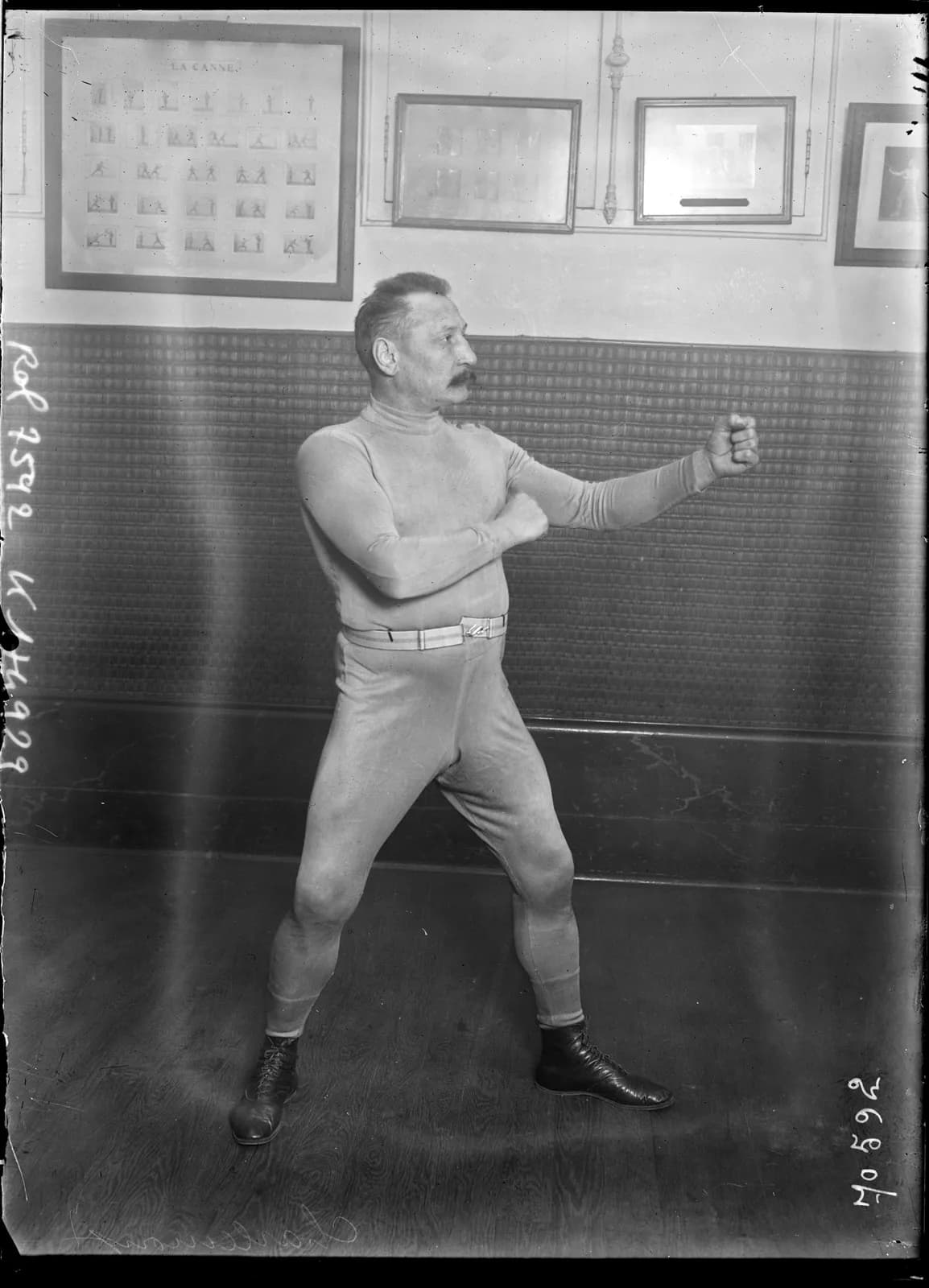
Photo: Mendoza against Humphries, 1789. Daniel Mendoza's straight lead hand made “scientific” boxing. Public domain, via Wikimedia Commons.
In this article
In 1789 a Jewish boxer from London called Daniel Mendoza, seventy-three kilograms on a good day, stood in front of Richard Humphries and did something the prize ring had not seen: he kept his lead hand out, straight, in Humphries's face, and moved. The crowd thought it was cowardice. Mendoza called it science, and the straight lead hand has been the first thing every boxing coach teaches since. It is still the punch most beginners throw worst.
The short answer, for the impatient: the jab is not the punch you finish fights with. It is the punch that measures distance, keeps the other person busy, opens every combination and covers your kicks and takedowns. Throw it badly and you carry that handicap into every exchange for years. Here are the five ways beginners throw it badly, why each one gets you hit, and a drill that fixes each in about a week.
Key facts
- What the jab does
- Measures range, interrupts, sets up combinations, covers kicks and shots
- Five mistakes
- Shoulder down, elbow out, hand not returning, pushing instead of snapping, no step
- Fix per mistake
- One cue, one drill, one week
- Equipment
- A mirror, a wall, a heavy bag and a phone camera
- Time
- Ten minutes of shadow boxing per day
Why this one punch decides so much
A fight is a distance problem long before it is a power problem. Whoever owns the range decides when the exchanges happen, and the jab is the tool that owns it: your fastest punch, the shortest path, the only one that leaves you in your stance, and a punch you can throw at four different speeds without telling anyone which one is coming. Everything else in stand-up fighting starts behind it. The cross needs the jab to close distance and turn the head. The hook needs the jab to make them cover. The low kick needs the jab to freeze the lead leg. The double leg needs the jab to bring the hands up so the shot can go under them.
Beginners under-use it because it does not feel like fighting. Coaches count punches, and in amateur boxing the winner of a round typically throws fifteen to thirty jabs, most of them touches rather than blows. Learn to throw it well and you will throw it more. That is the real fix, and it is why the boring drills below are worth your time.
1. The shoulder stays home and the chin comes out to play
The mistake: the arm extends but the shoulder stays where it started. Two things happen at once: your chin is bare on the side you are punching from, because nothing covers it, and the punch is short, because a jab reaches full length only when the shoulder rolls forward and up.
Why it gets you hit: the counter right hand lands over your jab. It is the most common knockout in beginner sparring, and it comes from this one habit.
The fix: at the end of every jab the shoulder touches the chin. Slowly, in a mirror: extend, roll the shoulder up, hide the chin behind it, come back. If you feel slightly tucked away at full extension, that is right. Two minutes at the start of every session for a week, then check on the bag whether it holds at speed.
2. The elbow goes sightseeing
The mistake: the jab travels in an arc because the elbow drifts sideways on the way out. The other person sees it earlier, it loses power because the force is no longer behind the fist, and it opens your ribs like a curtain.
Why it gets you hit: a flared jab is a slow jab. Good opponents read it, slip inside it and hit the body you just uncovered.
The fix: stand with your lead side a hand's width from a wall and jab along it. If the elbow scrapes the wall, it was too far out. A jab is a straight line from the guard to the target, elbow pointing at the floor the whole way. Thirty along the wall, both stances, before you touch the bag.
3. The hand goes out and stays for a look around
The mistake: the punch was fine, but the hand drops on the way back, or hangs out there for a fraction of a second while you admire it. That fraction is when the counter lands.
Why it gets you hit: a dropped lead hand is an invitation with your name on it. The overhand right, the lead hook and, in Muay Thai, the head kick all live in the gap you leave when the hand comes home low.
The fix: the return is part of the punch, not what happens afterwards. Do not think punch; think snap. The hand comes back on the line it went out on and lands at the chin. Ten jabs where you pay attention only to the return, then ten where you jab and immediately slip, to feel the hand already in guard before the head moves.
4. You are shoving, not punching
The mistake: the arm reaches full extension, but the punch pushes instead of striking. Usually the fist closes too early and the whole arm is tense from the shoulder, so the jab arrives as a stiff little shove.
Why it gets you hit: a shove has no snap and no sting. It moves the opponent instead of hurting them, and it comes back slower, which is the gap from mistake three all over again.
The fix: stay loose until the last inch. The hand is a relaxed fist or half open on the way out; it closes only on contact, and the small turn of the fist and forearm comes last. On the heavy bag you can hear the difference: a good jab cracks, a shove slaps. Alternate five loose jabs with five deliberately stiff ones, so you know exactly what you are avoiding.
5. Your feet have opinions about staying put
The mistake: the jab is thrown from a standstill. Without a step there is no reach, and a jab that only reaches when the opponent stands still is a jab that never lands on anyone good.
Why it gets you hit: you either fall short and get countered while off balance, or you lean in to reach and hand over your stance and your chin at the same time.
The fix: pair the jab with a short step of the lead foot. The foot lands as the fist connects, not before and not after, and the rear foot follows to restore the stance. Drill it on a line on the floor: step and punch, step back, step and punch, ten each way. Once the timing is there, put it into combinations: step-jab, cross, out.
Then the jab starts talking
Once the five fixes hold, the jab becomes a language. Double jab: the first one measures, the second one hits, a half-step between them. Jab to the body: bend the knees, not the back, and bring the hand home to the chin, not the hip. Jab, cross: the jab turns the head, the cross arrives while it is turning. Jab, low kick in Muay Thai: the jab freezes the lead leg, the kick takes it away. Jab, level change in MMA: the jab raises the hands, the shot goes under them. Every one of these dies if the jab is short, slow, flared or thrown without a step. Mendoza knew that in 1789. It has not changed.
The test
Throw twenty jabs on the heavy bag and have someone film you from the side. Watch for two things only: is the shoulder up at the end of the punch, and is the hand back at the chin afterwards. Fifteen out of twenty and you have the foundation; the rest is repetition. Fewer, and you know which week to start with.
Where to go next
- Give the jab a home in your solo work: Shadow Boxing With Purpose.
- Take it to the bag: Heavy Bag Intervals.
- The rest of the beginner's list: Seven Common Boxing Mistakes.
- The fighter who invented the straight lead: Boxing: From Bare Knuckles to the Queensberry Rules.
- The boxing and Muay Thai hubs.
Frequently asked questions
- How many jabs should I throw in a round?
- More than you think. Coaches who count punches in amateur boxing typically see the winner throwing 15 to 30 jabs per three-minute round, most of them never meant to land hard. A jab is a measuring stick and an interruption first, a weapon second.
- Should the jab be thrown with the palm down or the thumb up?
- Both are used. The classic boxing jab turns the fist palm-down at the end, which lifts the shoulder and adds snap; many Muay Thai and MMA coaches teach a thumb-up or 45-degree jab that comes back faster and is kinder to the wrist. Pick one for now and keep everything else identical.
- Why does my jab feel weak on the heavy bag?
- Usually because it is a shove, not a snap: the fist closes too early, the arm is tense all the way out, and the punch pushes into the bag instead of cracking against it. Stay loose, close the fist in the last few centimetres, bring the hand straight back. The power lives in the step and the shoulder, not in the arm.
- Should I step with every jab?
- Not with every one, but you should be able to. A jab from a standstill only reaches an opponent who is kind enough to stand still. Drill the step-jab until foot and fist land together, then decide in sparring when to step and when to jab in place.
- How long does it take to fix a bad jab?
- One habit per week is realistic. Ten focused minutes of shadow boxing a day with a single cue – shoulder up, elbow in, hand back – changes the movement in five to seven days; making it hold under pressure takes a few weeks of sparring.